
目录
As modern data centers, cloud platforms, and enterprise IT systems continue to expand, high-density network environments have become the new standard. However, increased device concentration also brings serious challenges such as cable congestion, signal interference, heat management issues, and maintenance difficulty. Traditional copper-based systems often struggle to keep up with these demands. This is where fiber optic technology plays a crucial role. In many large-scale deployments, especially those supported by wholesale fiber optic cable supply chains, fiber solutions are widely adopted to overcome these limitations and ensure stable, high-speed communication.
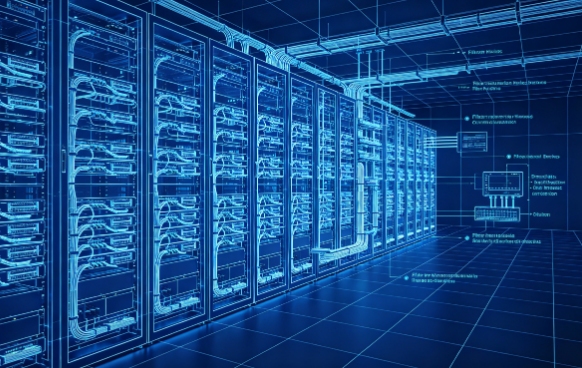
Solving Cable Congestion and Space Management Issues
One of the biggest problems in high-density environments is physical cable congestion. As more devices are added, managing large volumes of cables becomes increasingly difficult.
- Fiber optic cables have a much smaller diameter compared to copper cables, allowing significantly more connections within the same physical space. This helps data centers maximize rack utilization without overcrowding.
- High-density solutions such as bundled fiber systems reduce the number of individual cable runs, improving organization and making routing more efficient.
- Structured cabling designs, often sourced through wholesale fiber optic cable suppliers, help standardize installations and reduce clutter across large network infrastructures.
By reducing physical space requirements, fiber optic systems allow for cleaner, more scalable network environments.
Eliminating Signal Interference and Improving Stability
Another major challenge in dense network environments is electromagnetic interference (EMI), which can degrade signal quality and reduce transmission reliability.
- Fiber optic cables transmit data using light instead of electrical signals, making them completely immune to EMI caused by nearby electronic equipment.
- Even in environments with heavy machinery or densely packed servers, fiber maintains stable and consistent performance without signal degradation.
- Long-distance transmission remains reliable without the need for frequent signal boosters or repeaters, which simplifies network architecture.
This immunity to interference is a key reason why many enterprises prefer sourcing high-performance solutions from wholesale fiber optic cable providers for mission-critical systems.
Enhancing Data Transmission Speed and Bandwidth Capacity
High-density environments demand extremely fast and reliable data transmission to support cloud computing, virtualization, and real-time applications.
- Fiber optic cables offer significantly higher bandwidth compared to traditional copper wiring, enabling faster data transfer rates across the entire network.
- Multiple wavelengths can be transmitted simultaneously through a single fiber strand using advanced multiplexing techniques, increasing efficiency without adding physical infrastructure.
- This high capacity ensures smooth operation of data-heavy applications such as AI processing, video streaming, and large-scale databases.
These performance advantages make fiber optics a preferred solution in modern infrastructure projects, especially those built using wholesale fiber optic cable systems for large-scale deployment.
Improving Maintenance Efficiency and Network Reliability
In high-density setups, maintenance complexity is often a major operational challenge. Fiber optic technology helps simplify troubleshooting and long-term management.
- Clear labeling and structured fiber routing make it easier for technicians to identify and isolate faults without disrupting the entire system.
- Fiber cables have a longer lifespan and are less prone to wear and environmental damage compared to copper alternatives.
- Modular connector systems allow for quick replacement or upgrades without requiring extensive rewiring.
These benefits reduce downtime and maintenance costs, making fiber optic networks more reliable in demanding environments.
Supporting Scalability and Future Network Expansion
High-density environments are constantly evolving, and scalability is a key requirement for long-term success.
- Fiber optic infrastructure can easily support increased data loads without requiring a complete redesign of the existing network architecture.
- Additional fiber lines can be integrated into current systems with minimal disruption to ongoing operations, making expansion more efficient and less risky.
- High-capacity backbone structures ensure compatibility with future technologies and emerging higher transmission standards.
As a result, organizations place strong emphasis on scalable fiber solutions to ensure their infrastructure remains flexible and adaptable as technology continues to advance.
Conclusion
Fiber optic cable technology plays a vital role in solving the most pressing challenges of high-density network environments, including space limitations, signal interference, bandwidth constraints, maintenance complexity, and scalability needs. By offering higher performance, greater reliability, and improved efficiency, fiber solutions have become the foundation of modern network infrastructure. As demand for faster and more stable connectivity continues to grow, fiber optic systems will remain essential for building future-ready, high-performance networks.
0