
目录
Difficult stains on cooking equipment vary. There is a need for different strategies for removing grease from a frying pan, burnt food from a pot, minerals from glass products, and tomato or curry residue from plastic products.
However, this does not mean that a tough stain must be removed by applying more pressure. This can lead to scratching stainless steel objects, damaging nonstick coating, changing the form of certain plastic objects, and wearing down wooden objects faster.
The proper approach is to first identify the type of stain and the material of the utensil, then apply a suitable detergent, clean the surface gently, and finish by rinsing thoroughly and drying completely.
The fastest way to get rid of a stain is one that will work for both.
1. Match Stubborn Stains With the Right Cleaning Method
Firstly, identify the nature of your problem before attempting to clean any stubborn stains. This is because grease stains, burnt food, minerals, pigments, and dried food react differently and cannot be cleaned with the same cleaner.
Choose a Method Based on the Stain
Here is a practical starting point:
| Stain Type | Common Location | First Cleaning Approach |
| Grease | Pans and utensils | Warm water + dish soap |
| Burnt food | Pots and pans | Soak before scrubbing |
| Mineral deposits | Glassware and kettles | Mild acidic cleaner if suitable |
| Pigment stains | Plastic containers | Gentle soaking |
| Dried food | Plates and utensils | Warm-water soak |
As an example, grease doesn’t readily mix with water. The surfactants in dish soap enable the water to mix with the oils in the dirty dishes and help to wash away the grease.
White, mineral-type stains differ from this, since they often consist of leftover minerals due to evaporation of the water, so that method of cleaning would not be very effective.
Consider the Material Before You Start
The stain could be removed in different ways depending on the material of the utensil.
While stainless steel is abrasion-resistant, very aggressive abrasion would change its surface properties. Non-stick cookware is sensitive and requires more attention because steel wool and other abrasive items may ruin its surface. Glass is not difficult to clean, but it requires protection from sudden temperature changes.
Plastic tends to absorb fat and coloring substances, whereas wood spoons are sensitive to water. It would be better to make sure of two things before you clean your utensil:
What kind of stain is that?
What is the material of your utensil?
Remove Loose Residue First
In the case of greasy, saucy, or messy pans, ensure you get rid of any food that may be stuck to it prior to applying the cleaner.
One way of doing it is: Get Rid of Food Stuck in Pan → Use the Cleaning Product → Give it Time to Work → Scrub and Rinse
That way, the cleaner can be effective on residue stuck to the pan, not food lying loose.
2. Use Soaking to Loosen Stubborn Food Residue
The most common mistake people make when they clean is that they immediately scrub the dry food deposits without softening them first.
Softening the deposits will make cleaning so much easier.
Give Warm Water Time to Work
Where there is dried sauce, dried starch, and regular food stains, use hot water mixed with a little dishwashing soap and soak the item for about 10-20 minutes.
The thicker the food stain, the longer it might take to remove, depending on the nature of the material.
It is not just enough for the item to get the stain magically removed when soaked; the stain will be made wet for easy removal by using a soft sponge or brush.
Avoid Excessively Hot Water
Heat does not always equal cleanliness.
Certain kinds of plastics may undergo deformation when subjected to very high temperatures. The wood-based utensils will swell or even crack due to prolonged contact with water, while the non-stick cookware must be safeguarded from extreme temperature fluctuations.
A helpful guideline here would be: Employ water that is warm enough to help loosen the deposits but safe for the material used.
In the same way, you are not supposed to put a hot pan right into cold water.
Use Baking Soda Carefully
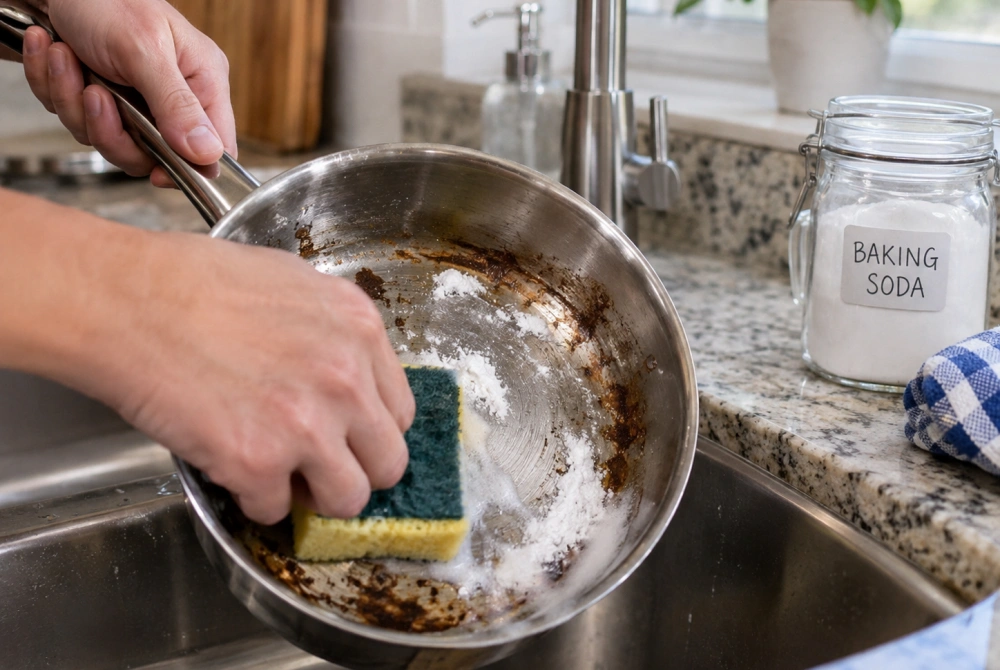
The mixing of baking soda and water may produce a mildly abrasive cleaning paste: Baking Soda + Water → Cleaning Paste
The mixture may help loosen some difficult-to-remove stains, but it does not need to be used on all materials. It is necessary to take into account the care recommendations of the manufacturers.
The acidity of the vinegar helps remove some mineral residues, but there are materials that cannot come into contact with it.
The combination of baking soda and vinegar produces an impressive bubbling effect; however, at the same time, it neutralizes the acidity and alkalinity of these substances.
3. Clean Burnt Pots Without Damaging the Surface
Cooking food until it is burnt becomes hard because heat will make the food stick to the cooking utensils.
The aim here is to remove the food particles without damaging the underlying layer.
Soak Before Reaching for an Abrasive Scrubber
When the cookware has cooled down, pour warm water into it with a bit of dish soap. Let it sit for 15-30 minutes.
When the burnt material becomes softened, start removing it using a wooden, silicone, or any other food-safe utensil. If there is some material left, repeating the soaking procedure is better than applying more pressure right away.
A small quantity of baking soda paste can be used for additional scrubbing in appropriate cookware.
Adjust the Method to the Cookware
| Material | Soft Sponge | Strong Abrasives | Long Soaking |
| Stainless Steel | ✓ | Use carefully | ✓ |
| Nonstick | ✓ | Avoid | Limited |
| Glass | ✓ | Avoid | Usually ✓ |
| Plastic | ✓ | Avoid | Depends |
| Wood | ✓ | Avoid | Avoid |
Steel wool and sharp metal instruments are especially dangerous to non-stick cookware. While a stain that is hard to remove can be removed again, a scratched coating cannot be renewed with washing alone.
Never Mix Household Cleaners Randomly
The usage of more chemicals is not always a guarantee of better results.
Especially beware of using chlorine and ammonia or acidic solutions since it will lead to the formation of dangerous gases.
The proper way of handling this problem is: More Chemicals Does Not Mean Better Cleaning
If the stain persists, you need to think about the nature of the stain and the vessel itself.
Conclusion
Stain removal on kitchen utensils becomes less an issue of applying more effort than an issue of applying the right method to remove the right kind of stain on the right kind of material.
For most routine cleaning tasks, keep in mind: Soften → Clean → Rinse → Dry
Timely treatment of food stains, giving time for the stains to soften, and the absence of excess heat and abrasive agents will make your kitchen utensil cleaning task easier and safer.
0