

目录
In indoor or greenhouse environments, maintaining the right humidity is one of the most important factors for the healthy development of aerial roots ficus bonsai. Humidity not only affects the tree’s overall vitality but also plays a key role in the formation and growth of aerial roots. When the environment is properly controlled, aerial roots ficus bonsai can develop strong, well-shaped roots that enhance the visual appeal and structural balance of the tree. However, improper humidity levels may slow down growth or even cause damage. Therefore, understanding the ideal humidity range and how to manage it is essential for successful bonsai care.
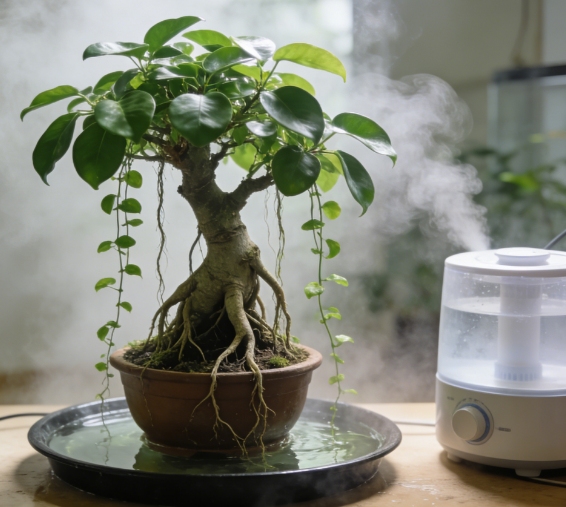
Ideal Humidity Range for Aerial Roots Ficus Bonsai
The optimal humidity level for aerial roots ficus bonsai generally falls between 60% and 80%. This range closely mimics the tropical conditions in which ficus trees naturally thrive.
- When humidity is maintained between 60% and 70%, aerial roots tend to grow steadily and develop in a controlled manner, making it ideal for long-term maintenance
- At 70% to 80% humidity, root formation accelerates, resulting in faster and denser aerial root development
- If humidity drops below 50%, growth may slow significantly, and aerial roots can dry out or stop developing altogether
By keeping humidity within this ideal range, growers can encourage consistent and healthy root formation.
How Humidity Influences Aerial Root Development
Humidity directly impacts how aerial roots absorb moisture and develop their structure. For aerial roots ficus bonsai, the surrounding air provides essential moisture that supports root growth.
- Higher humidity levels help keep the root tips hydrated, allowing them to extend more easily and consistently
- Stable moisture in the air reduces stress on developing roots, making them more flexible and easier to train
- Fluctuating humidity levels can interrupt growth cycles, leading to weak or uneven aerial root formation
In short, consistent humidity creates a stable environment that supports continuous and healthy aerial root growth.
Signs of Incorrect Humidity Levels
Observing the condition of your aerial roots ficus bonsai can help determine whether the humidity is appropriate.
- Leaves becoming dry, curled, or turning yellow may indicate that the air is too dry
- Aerial roots that shrink, harden, or stop growing often signal insufficient humidity
- If you notice mold, soft root tissue, or dark spots, this could be a sign of excessive humidity combined with poor airflow
Recognizing these signs early allows you to make timely adjustments to prevent long-term damage.
Effective Ways to Control Humidity
Maintaining proper humidity for aerial roots ficus bonsai often requires combining several techniques for best results.
- Using a humidifier can help maintain a consistent indoor humidity level, especially in dry climates
- Light misting of leaves and aerial roots can provide temporary moisture and simulate natural tropical conditions
- Placing a water tray with pebbles under the pot increases local humidity through evaporation
- Ensuring proper ventilation prevents excessive moisture buildup and reduces the risk of fungal issues
By combining these methods, you can create a balanced environment that supports healthy root development.
Seasonal Humidity Adjustments
Humidity needs may change depending on the season, and aerial roots ficus bonsai should be cared for accordingly.
- During summer, maintaining humidity around 60%–70% helps prevent excessive moisture that could lead to disease
- In winter, indoor heating can dry out the air, so increasing humidity above 70% is beneficial
- In spring and autumn, moderate to high humidity supports active growth and encourages aerial root formation
Adapting humidity levels to seasonal changes ensures consistent growth throughout the year.
Conclusion
The ideal humidity for aerial roots ficus bonsai typically ranges between 60% and 80%, providing the perfect environment for healthy aerial root development. By maintaining stable humidity, monitoring plant condition, and adjusting care methods according to seasonal changes, growers can significantly improve the appearance and vitality of their bonsai. With proper humidity control, aerial roots ficus bonsai can thrive and display their full artistic and natural beauty.
0