
目录
Among various packaging solutions, monoblock filling machines are widely used in industries such as food and beverage, cosmetics, pharmaceuticals, and chemicals. A monoblock filling machine integrates multiple functions—such as filling, capping, and sometimes labeling—into a single compact unit. This integrated design helps reduce production space, improve workflow efficiency, and minimize manual handling errors. As production demands continue to grow, more manufacturers are adopting monoblock systems to achieve faster and more reliable packaging processes.
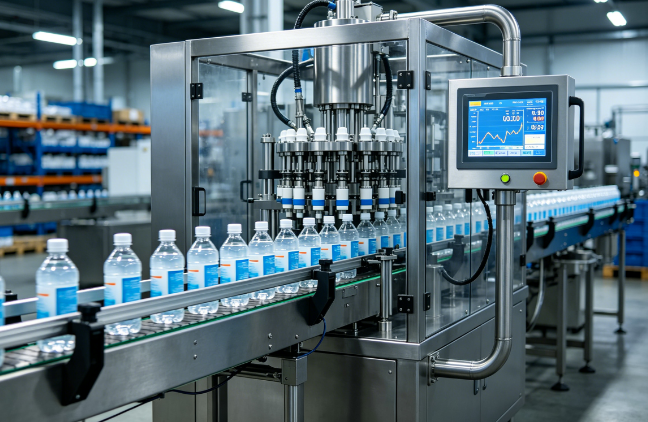
Structure and Working Principle of Monoblock Filling Machines
Monoblock filling machines are designed as a unified system where multiple packaging processes are combined into one machine body:
- Integrated multi-function design
Unlike traditional separate machines, monoblock systems combine filling, capping, and sealing processes in a continuous operation. This reduces transfer time between machines and improves production speed. - Synchronized mechanical operation
All working stations operate in a coordinated manner through a central control system. Bottles move smoothly from one stage to another without manual intervention, ensuring stable and continuous production flow. - Precision control system
Modern monoblock filling machines use PLC and servo-driven technology to control filling volume, capping torque, and conveyor speed, ensuring high accuracy and consistency in every production cycle.
Key Features of Monoblock Filling Machines
The popularity of monoblock filling machines comes from their advanced features and practical benefits:
- Compact structure design
The integrated layout significantly reduces machine footprint, making it ideal for factories with limited space or high-density production environments. - High-speed production capability
By combining multiple processes into one system, production speed is greatly improved compared to standalone machines working separately. - Reduced human intervention
Automation reduces the need for manual handling, lowering labor costs and minimizing the risk of contamination or operational errors. - Flexible adjustment options
Machines can be adjusted for different bottle sizes, filling volumes, and product types, allowing manufacturers to handle multiple production lines with one system.
Applications Across Different Industries
Monoblock filling machines are widely used due to their adaptability in various sectors:
- Food and beverage industry
Used for filling water, juice, milk, sauces, and edible oils, ensuring hygienic and fast production with minimal contamination risk. - Cosmetics and personal care industry
Suitable for lotions, creams, shampoos, and serums, where precise filling and attractive packaging are essential for product quality. - Pharmaceutical and chemical industry
Designed for sterile and accurate filling of liquids, syrups, and chemical solutions, meeting strict safety and regulatory standards. - Daily chemical products
Commonly used for detergents, cleaning solutions, and household liquids, supporting large-scale and continuous production demands.
Advantages of Using Monoblock Filling Machines
Several important advantages make monoblock filling machines a preferred choice in modern production lines:
- Improved production efficiency
By integrating multiple processes, the machine reduces downtime and increases overall output. - Space-saving solution
One compact unit replaces multiple separate machines, optimizing factory layout and reducing installation space requirements. - Lower operational cost
Reduced labor needs and higher automation levels lead to significant cost savings in long-term production. - Enhanced product consistency
Precise control systems ensure that every product is filled and sealed with uniform quality, improving brand reliability.
Maintenance and Operation Considerations
To ensure long-term stable performance of monoblock filling machines, proper maintenance is essential:
- Regular cleaning and sanitation
Especially important in the food and pharmaceutical industries to prevent contamination and maintain hygiene standards. - Routine mechanical inspection
Checking filling nozzles, sealing heads, and conveyor systems helps prevent unexpected breakdowns and production delays. - Software and control system updates
Updating PLC systems and calibration settings ensures accurate operation and long-term machine stability.
Conclusion
A monoblock filling machine is an advanced packaging solution that combines filling, capping, and other processes into a single efficient system. It offers high-speed production, compact design, and excellent automation capabilities, making it suitable for various industries such as food, cosmetics, pharmaceuticals, and chemicals. As manufacturing continues to evolve toward smarter and more efficient systems, monoblock filling machines will remain an important choice for companies seeking to improve productivity, reduce costs, and maintain consistent product quality.
0