
目录
Home tools are designed to withstand repeated work involving repair, maintenance, and other DIY work, but even high-quality tools can be ruined by lack of maintenance and improper storage. Contaminants, moisture, excess pressure, and inappropriate usage may gradually decrease the effectiveness of tools and reduce their lifetime. Some simple maintenance techniques do not need to be difficult to have a significant effect.
Whether you use a screwdriver from time to time or a cordless drill weekly, correct maintenance will allow you to preserve the functionality and efficiency of the tools. The following techniques will help you increase the service life of household tools.
How Should You Clean and Maintain Your Home Tools?
Cleaning and maintenance will help get rid of contaminants that might accelerate the wear of tools. Spending a few minutes on cleaning after the job is done can help avoid serious problems.
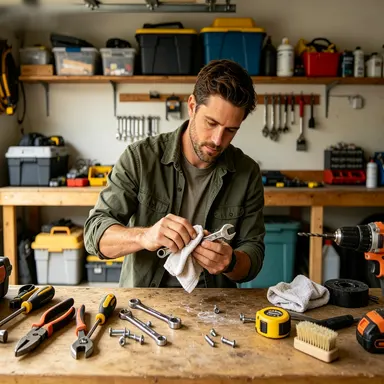
Clean Tools After Each Use
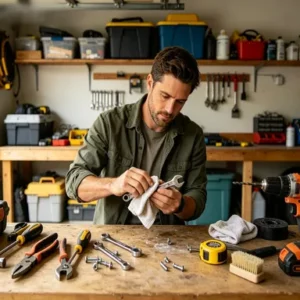
Clean dust, sawdust, oil, dirt, and other debris before storing your tools. Hand tools should be wiped using a dry cloth. A soft brush is suitable for cleaning grooves, joints, and vent holes. Replacing a worn accessory before it fails can also reduce stress on the main tool. For instance, a severely worn drill bit may require greater pressure, increasing heat and slowing the work. If a tool is wet, dry it before storing. Tools that use adhesives, sealants, or similar substances should be cleaned to eliminate residue since hardened deposits could hinder the movement of parts and complicate the cleaning process.
Corded power tools should be disconnected from the power source and cordless power tools’ batteries removed before cleaning. Use a dry cloth or a brush when cleaning electrical parts to prevent moisture from reaching them.
Check for Wear and Damage
Cleaning is also an opportunity to inspect tools. Check for cracks on the handles, bent shafts, loose parts, dull cutting edges, damage to cords, and corrosion on metal parts. Check the following parts that are crucial for the proper functioning of the equipment:
- Check screwdriver tips for deformation.
- Inspect pliers and wrenches for excessive wear.
- Examine drill bits for cracks or severe dulling.
- Check saw blades for damaged or missing teeth.
- Inspect power-tool cords and batteries for visible damage.
Replacing damaged accessories before they fail may protect the main tool from excessive wear. For example, a drill bit that is badly worn may need extra pressure to operate, hence overheating.
Lubricate Moving Parts When Needed
Lubricants are necessary to ensure the smooth operation of some tools that have hinges, gears, bearings, or any other movable parts. Use the lubricant recommended by the manufacturer, not some random oil you have at home. Lubricate sparingly because excess amounts may draw dust and make surfaces too sticky for moving. For tools with certain lubrication frequencies, it is better to follow the manufacturer’s instructions and not create some schedule of your own.
How Should You Store Your Home Tools?
Storage will protect tools from moisture, impacts, contamination, and excessive stresses. Sometimes it can play an even more significant role than maintenance.
Keep Tools Dry and Protected
One of the primary factors leading to corrosion of steel tools is moisture. Thus, metal tools should be stored indoors in a dry place, not in a basement, an outside shed, or anywhere else where moisture and condensation may accumulate. It would be better if the air humidity level did not exceed 60%; in humid places, you may use a properly sealed toolbox.
Before long-term storage, make sure tools are completely dry. For metal surfaces, a light protective coating may also be appropriate when recommended for the tool and storage conditions.
Organize Tools Properly
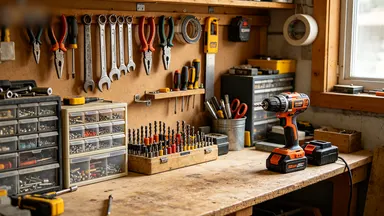
Do not put different types of tools together in a container, as they may bump or scratch one another. Organize your equipment into separate categories using a variety of toolboxes, drawers, wall fixtures, or storage containers. This will also allow you to see which parts are missing or broken.
There is a need to exercise caution in storing battery-powered tools as well. It is advisable to follow the manufacturer’s instructions concerning batteries’ temperature and charging conditions. Also, be sure to avoid storing battery-powered tools near metal objects that can lead to an electrical connection.
Protect Sharp and Sensitive Parts
Tools with cutting edges, drill bits, measuring devices, and similar parts may get damaged if not stored correctly. Be sure to keep these parts in cases, protective covers, special holders, or compartments as necessary. Do not place any large tools above sensitive measuring tools.
Similarly, do not leave sharp blades scattered in a drawer, as they might hurt other tools or themselves by making unintentional cuts. Proper storage should ensure safety, accessibility, and stability for the tools.
What Habits Can Extend the Life of Your Home Tools?
Though maintenance and storage cannot be ignored, everyday operating practices influence the lifespan of your tools directly. It is important to follow the operating recommendations to minimize unnecessary mechanical, electrical, and thermal load on the equipment. Basic techniques, such as selection of the right tool, control of force, following the instructions,s and regular checks of equipment, will help to avoid many problems.
Use the Right Tool for Each Task
Choose a tool according to the material, task, required force, and working conditions. Thus, it is necessary to use a screwdriver for screw driving and not for prying something apart, and to use a wrench for loosening and tightening fasteners, and not pliers. Inappropriate usage will lead to damage to both the tool and the work object.
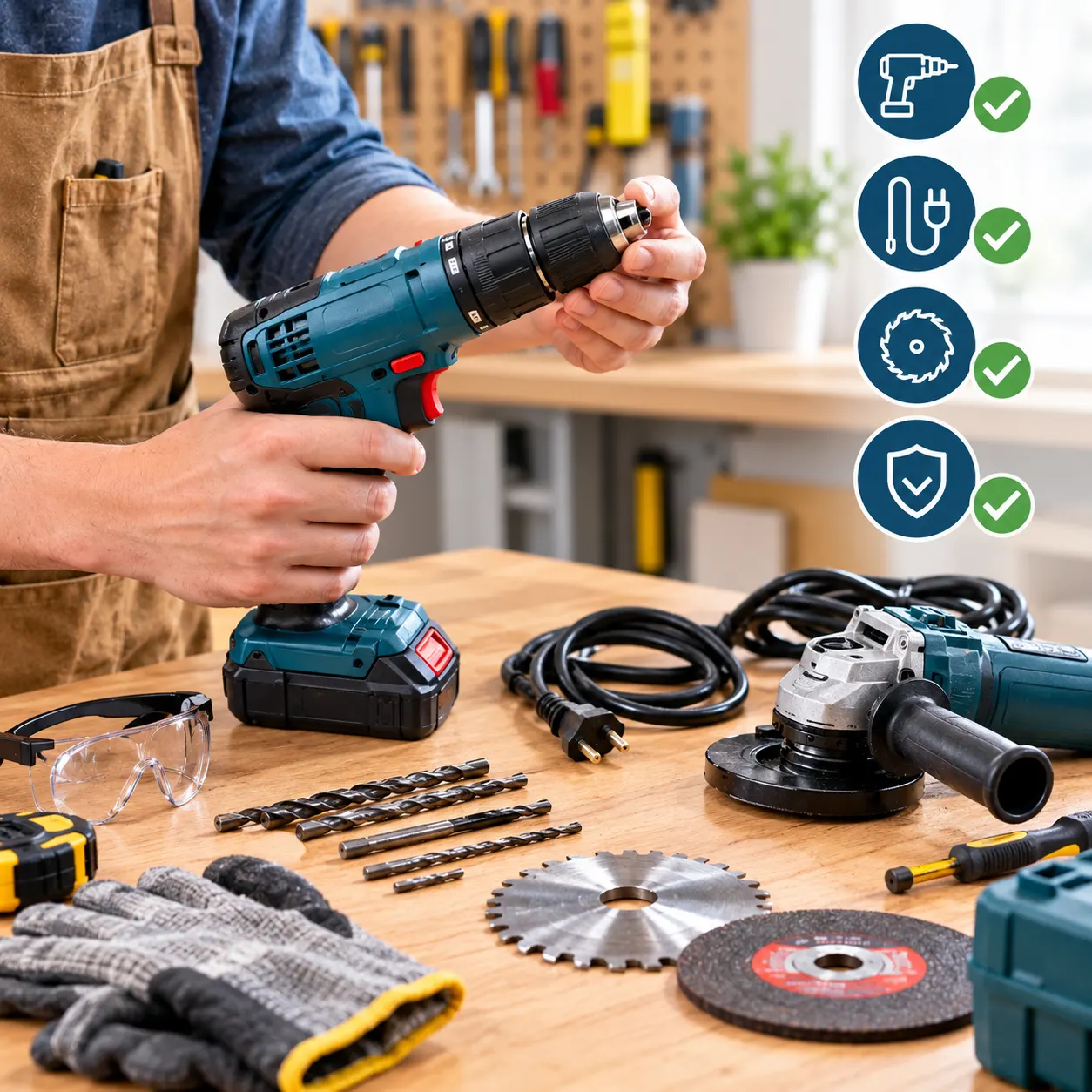
Power tools also should correspond to the work process. Thus, a cordless drill will be appropriate for drilling and fastening, and cutting, grinding, and sanding jobs will require different tools and accessories. To minimize unnecessary wear, it is necessary to choose the proper size of accessory, materials, and operating speed.
Avoid Excessive Force
Pressure can contribute to wear and tear of tools due to the increase in friction, heat, and mechanical stresses. A screwdriver that needs extra effort could be a result of a faulty screw head or the wrong type of bit used, and a drill that has difficulty penetrating through the surface is an indication that the bit is dull or the speed setting is wrong.
Do not force a tool to continue working once its performance starts to deteriorate. Inspect first the accessory, the workpiece, and operating conditions. In case of power tools, give your tools enough time to cool once they heat up too much, especially when drilling, cutting, or sanding.
Follow Proper Operating Procedures
Follow instructions regarding operating speeds, accessories, capacities, and maintenance schedule as indicated by the manufacturer. For instance, when you buy an accessory whose speed does not exceed 8,000 RPM, it will not work when mounted on a machine whose speed exceeds that value. This applies to cordless machines too.
Do not operate the device continuously if it is not designed for such operation. Brief breaks can give time to cool down the motor and battery of the tool. Do not attempt to remove guards or other protective elements because they represent the system of safety that is an integral part of the operation of the tool.
Inspect Tools Regularly
Inspection allows one to notice minor damage and solve the problem before it affects the whole tool. Check the handles, housing, fastening mechanisms, movable parts, cutting tools, cords, batteries, and switches before beginning a major project. If a tool is often in use, then an inspection of the device after a few weeks is also helpful. Tools that have been sitting for a long time need to be inspected before work begins.
| Check | What to Look For |
| Tool condition | Cracks, bends, loose parts |
| Metal surfaces | Rust, corrosion, pitting |
| Moving parts | Stiffness, unusual movement |
| Accessories | Wear, cracks, deformation |
| Power components | Damaged cords, batteries, switches |
| Ventilation | Dust buildup or blocked openings |
However, in case of structural damage, exposed wires, faulty batteries, or malfunctions of safety features, do not try to repair them yourself; simply do not use the equipment. Such issues may be solved quickly if you act in time and thus avoid equipment breakdown.
Conclusion
Extending the life of home equipment is not that difficult. Clean the equipment after each use, inspect it often, protect it from moisture, and use it for the right purposes. Replacing worn-out accessories and timely resolution of minor issues can help to save the main equipment from unnecessary damage. It is much easier to conduct regular maintenance than to wait till the equipment breaks down. Proper care and treatment of home tools will keep them safe and efficient for a long period of time.
0