
目录
Whether in factories, warehouses, commercial complexes, or parking facilities, floors are constantly exposed to pressure, abrasion, chemicals, and moisture. Over time, unprotected surfaces deteriorate, leading to costly repairs and operational disruptions. This is why many property owners and facility managers are considering professional floor coating systems as a long-term investment. With guidance from experienced floor coating suppliers, it becomes easier to understand whether this solution truly delivers value over time.
Understanding the Long-Term Cost Perspective
When evaluating floor coating as an investment, it is important to look beyond initial installation costs and focus on lifecycle value.
- Reduced repair frequency over time:
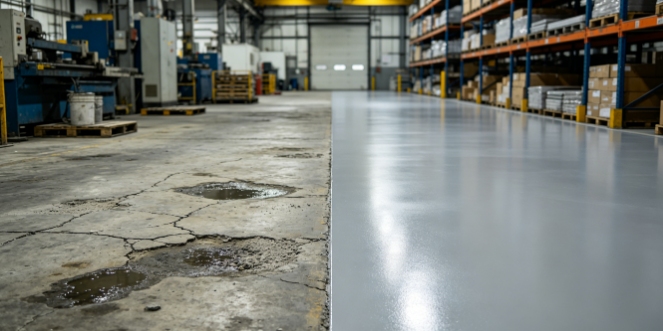
Uncoated concrete often develops cracks, dusting, and surface erosion, which require repeated patching or resurfacing. A properly installed coating significantly reduces these issues, lowering maintenance frequency and associated labor costs. - Lower downtime for maintenance activities:
In industrial or commercial environments, shutting down operations for floor repairs can lead to productivity losses. Coated floors are easier to maintain and repair in sections, minimizing operational interruptions. - Extended replacement cycle:
Instead of replacing flooring every few years, a coated system can extend the usable lifespan of the surface, spreading the initial investment over a much longer period.
Durability Benefits That Reduce Maintenance Burden
One of the strongest arguments for floor coating is its ability to improve durability and reduce ongoing maintenance requirements.
- Resistance to mechanical wear:
Heavy equipment, forklifts, and continuous foot traffic can quickly damage untreated surfaces. Coatings form a protective layer that absorbs impact and reduces surface degradation. - Protection against environmental damage:
Moisture, oil, and chemical spills are common in industrial environments. Coated surfaces prevent these substances from penetrating the substrate, reducing long-term damage risks. - Stable surface performance:
Unlike untreated floors that degrade unevenly, coated systems maintain a consistent surface quality, reducing the need for frequent leveling or resurfacing work.
Maintenance Efficiency and Operational Advantages
Beyond durability, coated floors also improve day-to-day maintenance efficiency, which directly affects long-term cost savings.
- Simplified cleaning processes:
Smooth and sealed surfaces prevent dust accumulation and make cleaning faster and less labor-intensive. This reduces the need for specialized cleaning equipment or chemicals. - Improved hygiene control:
In industries such as food processing or healthcare, maintaining a clean environment is essential. Coated floors eliminate cracks and pores where bacteria can accumulate, improving sanitation standards. - Reduced material consumption:
Since coated floors require fewer cleaning agents and repair materials over time, operational costs are significantly reduced.
Key Factors That Influence Investment Value
The return on investment from floor coating depends on several important factors that should be evaluated before installation.
- Type of coating system used:
Epoxy, polyurethane, and polyaspartic coatings each offer different performance levels. Choosing the right system based on usage conditions ensures maximum value. - Quality of installation process:
Proper surface preparation and professional application are essential. Poor installation can reduce lifespan and increase long-term maintenance costs. - Environmental conditions of the facility:
High-traffic, chemical-heavy, or moisture-prone environments require more advanced coating solutions to ensure durability. - Expert consultation and planning:
Working with experienced floor coating suppliers helps ensure that the selected system matches the specific operational needs of the facility, reducing the risk of premature failure.
Potential Limitations to Consider
While floor coating offers many long-term benefits, it is important to consider potential challenges before making an investment.
- Initial installation cost:
High-quality coating systems can require a significant upfront investment, which may be a concern for smaller businesses or limited budgets. - Need for proper maintenance practices:
Although coatings reduce maintenance, they are not maintenance-free. Regular cleaning and occasional inspections are still necessary to preserve performance. - Sensitivity to installation conditions:
Temperature, humidity, and surface preparation quality can all affect final results. Improper conditions may reduce coating effectiveness.
Conclusion
Floor coating is generally a worthwhile investment for long-term maintenance, especially in environments where floors are exposed to heavy use, chemicals, or frequent cleaning. While the initial cost may be higher than untreated flooring, the long-term benefits—including reduced repairs, lower maintenance costs, and extended surface lifespan—often outweigh the upfront expense. By working with knowledgeable floor coating suppliers, businesses can ensure they choose the right system for their specific needs, maximizing both performance and return on investment over time.
0