
目录
In cases where the washing machine fails to turn on, the refrigerator ceases to cool, or the air conditioning unit stops, one would be tempted to think that there must have been a malfunction and hire a professional repairer.
However, the reason why the appliance is failing to work does not necessarily mean that its motor, compressor, or control board has malfunctioned. It could just as well be caused by a loose plug, a tripped breaker, wrong settings, a clogged filter, or even the activation of the child lock function.
When troubleshooting an appliance, check the power, settings, connections, airflow, reset options, maintenance status, and error codes to help narrow down the possible cause of the problem. These basic checks can identify common issues, but they should not replace professional repairs. If you notice smoke, sparks, a burning smell, a gas leak, or other serious warning signs, stop troubleshooting immediately and seek professional assistance.
1. Check Whether the Appliance Is Actually Getting Power
In the event that an appliance is totally non-responsive, consider the source of power first rather than jumping to the conclusion that it is a malfunction within the machine itself.
Check 1: Plug Inspection–Cord and the Electrical Socket
Ensure the plug is properly plugged in and examine the external power cord for any cuts, damaged sections, discoloration, or burnt sections.
Should the outlet seem normal, test it with another smaller appliance that works fine. Should the small appliance not work, the outlet or the electrical circuit could be the culprit.
Appliances using a power strip should also have their switches checked, as well as their protection status. For kitchens, bathrooms, garages, and areas around water, GFCI outlets may have been tripped.
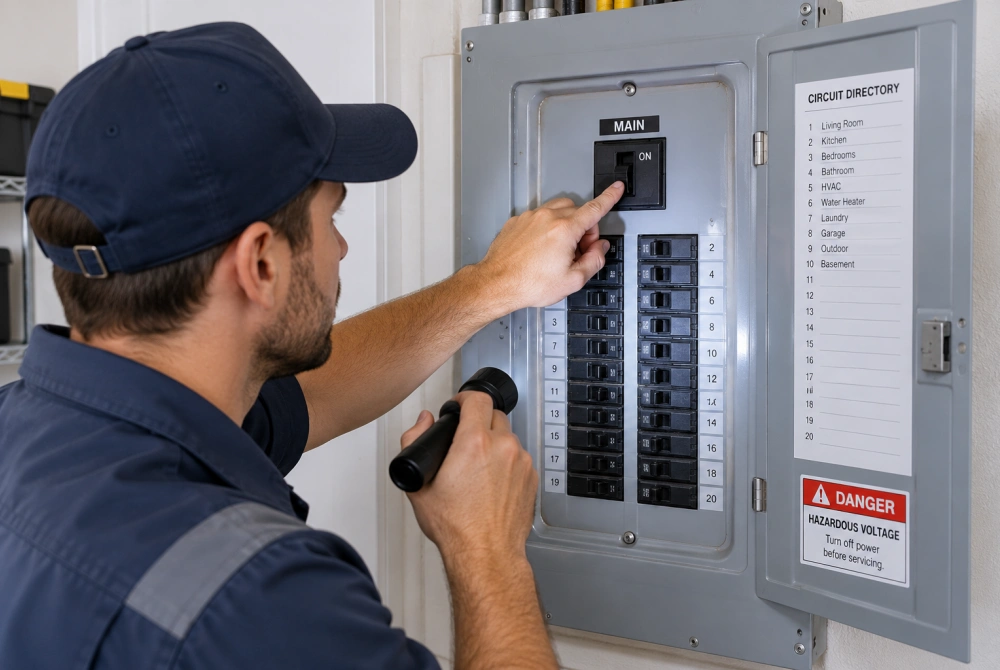
Check 2: Check the Circuit Breaker
The circuit used in residential areas uses 15-amp or 20-amp breakers depending on local regulations.
There is always a good explanation when the circuit breaker has tripped as to why the appliance stopped working suddenly. However, there is a difference between simply resetting a breaker and repeatedly resetting a tripped breaker.
Repetitive tripping may signify:
• Circuit overload
• Short circuit
• Wiring issue
• An electrical problem within the machine
Do not continue tripping the breaker just to operate the appliance.
Check 3: Inspect External Connections
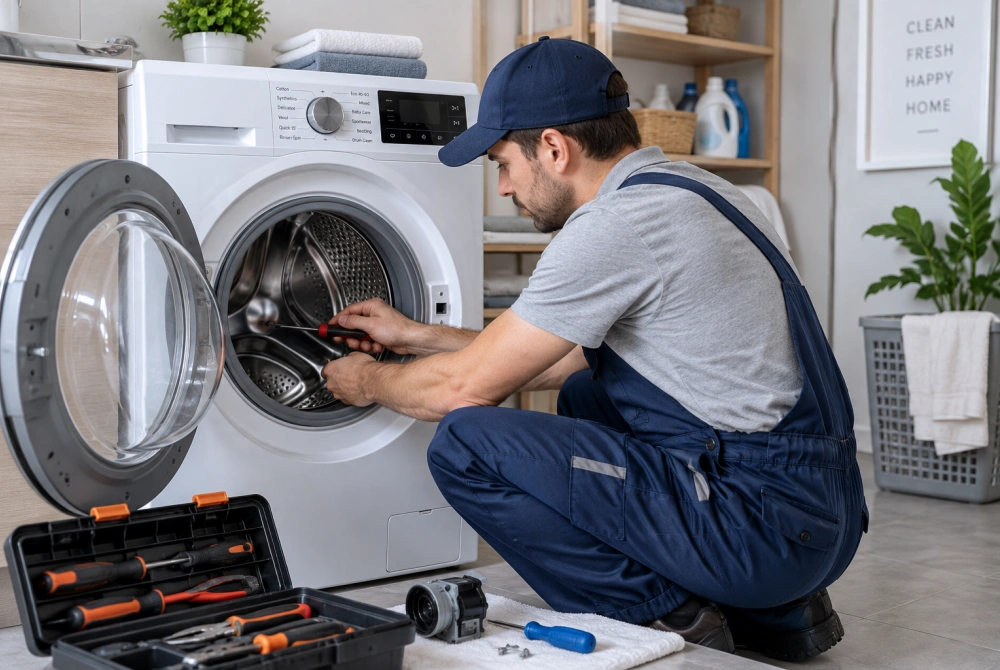
The device may be powered, yet fail to function due to another connection being disconnected.
For instance, a washing machine will not turn on if its door is not locked properly via its door sensor. There may be an issue with the lock of a dishwasher, whereas a closed water supply valve would prevent some appliances from finishing their cycles.
Some connections you can check include:
• Doors and lids
• Water supply hoses
• Drainage hoses
• External wires
No disassembling of the device is needed at this point.
2. Check the Settings Before Assuming Something Is Broken
Once power and connectivity issues have been ruled out, assess the appliance settings. Contemporary appliances come equipped with numerous modes, timers, sensors, and other features which could potentially be confused for errors.
Check 4: Check the Mode and Temperature Settings
An air conditioning system operating in fan mode instead of cool will only distribute air, without cooling the room.
A washing machine may seem to not operate due to Child Lock, Delay Start, Pause mode, wrong cycle selected, or the open door.
It is important to note that the temperature settings play a vital role as well. For food preservation, refrigerators are typically required to maintain a temperature of 40°F (4°C), while freezers are typically required to maintain about 0°F (-18°C).
Check 5: Examine Filters, Vents, and Drains
A faulty appliance that functions well but poorly might experience some airflow or drainage issues.
Clogged HVAC filters limit airflow. Clogged filters in your dryer will make your clothes dry slowly. Dirt around the brush of your vacuum cleaner limits the suction.
It’s the fundamental principle: Restricted Air Flow = Increased Resistance = Reduced Efficiency
When dealing with dishwashers and washing machines, check visible areas for any kinks in drains or hoses. It’s pointless to disassemble your appliance in search of an obstruction.
Check 6: Try a Safe Reset
Modern devices often utilize electronic control systems, sensors, and software.
In case of a temporary malfunction of the control system, the device can operate abnormally.
If it is allowed by the manufacturer, the simplest way is to perform the following procedure: Off → Disconnect the power supply if necessary → Wait → Turn On
Please consult your manufacturer regarding the procedure and duration of waiting.
Resetting is only supposed to help detect a temporary malfunction. If an appliance requires daily resetting, it is not fixed yet.
Check 7: Read the Error Code
The employment of codes such as E1, F5, OE, and UE could be highly diagnostic, but the significance of these codes differs.
Do not refer to the “E1 error” but rather use: Brand + Model number + Error Code
The following could be useful information to provide:
• When did the error occur?
• What were you doing with the appliance then?
• Did you experience anything unusual in terms of sound or odor?
• Was the error recurring when the machine restarted?
3. When Should You Stop Troubleshooting and Call a Repair Technician?
Basic troubleshooting only goes so far. Knowing where to stop is key to home maintenance.
Recognize the Warning Signs
If the following situations arise, discontinue the use of the unit:
• Smoke or sparks
• Odor of burning
• Presence of a gas leak
• Exposure of wiring
• Excessive water leakage
• Constant tripping of breakers
• Overheating
• Strange electrical sounds
Particular care must be exercised when there is water around electrical components. Troubleshooting for internal wiring problems, gas-related troubles, refrigerants, and electrical components
| Problem | Basic Check | Technician |
| Loose plug | ✓ | |
| Incorrect setting | ✓ | |
| Dirty accessible filter | ✓ | |
| Error code lookup | ✓ | |
| Internal wiring fault | ✓ | |
| Repeated breaker trips | ✓ | |
| Gas or refrigerant issue | ✓ | |
| Major internal leak | ✓ |
The following is a handy guide: Work on what you can examine without taking anything apart that you don’t know how to fix. Prior to contacting a repairman, take down the make and model of the appliance, as well as the error code it is displaying and what you have already done to check the problem.
Conclusion
There is no need to fix an appliance right away, even when it shows problems. By verifying the following things, many simple issues can be eliminated.
Firstly, troubleshooting is not about fixing every issue on your own. It’s more about identifying the problems you can solve safely and those that need professional help.
In fact, the best repair decision comes with understanding where to draw the line.