
目录
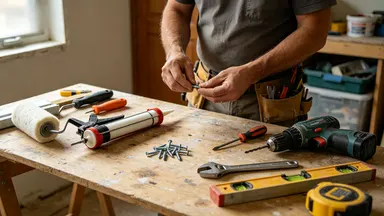
It becomes easier to handle house maintenance issues with the help of learning various do-it-yourself skills. This means that one can solve minor issues related to house maintenance without necessarily calling professionals for help. Various skills are easy to learn, such as caulking, painting, basic plumbing, repairing furniture, and hanging things on walls.
It is important to note that DIY skills do not require a person to solve every household problem by himself/herself. To effectively use DIY skills, one should know his/her limits, select appropriate materials, and follow instructions. Thus, it is enough to have several skills to successfully maintain one’s household without any unnecessary repair expenses.
Why Are DIY Skills Useful for Homeowners?
Reduce Dependence on Professional Services
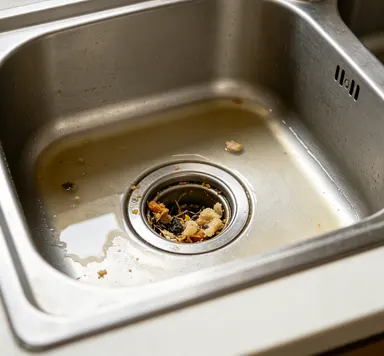
One of the biggest benefits of using DIY skills is the ability to handle small household problems without scheduling a service. Such problems can be solved easily without the need for any special equipment or skills; for example, repairing a cabinet handle, hanging something on a wall, filling holes, fixing sealant, painting the wall, or unclogging the drain.
DIY knowledge also allows homeowners to detect issues early on. For example, there might be a tiny hole around the window that would let moisture into the area. It is necessary to fix this issue beforehand as a preventive measure for home maintenance. There is one way of categorizing home maintenance that may be useful:
| Repair Level | Typical Tasks | DIY Suitability |
| Basic | Painting, caulking, furniture adjustment | High |
| Intermediate | Shelf installation, minor plumbing | Moderate |
| Advanced | Major electrical or structural work | Professional |
Save Money on Simple Home Repairs
The labor costs will be quite substantial when it comes to small maintenance work. DIY knowledge will help save a considerable amount of money, especially if several such jobs have to be done during the year. It is not always a matter of spending less money. Poor-quality repairs will result in further damage to the house and in higher costs in the end. That is why homeowners need to compare how complicated the job is and how skilled and equipped the workers are.
What Are the Most Useful DIY Skills to Learn at Home?
Basic Caulking and Sealing
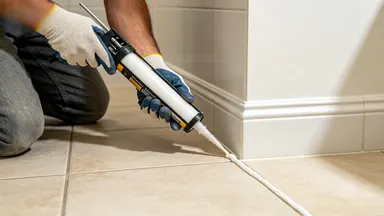
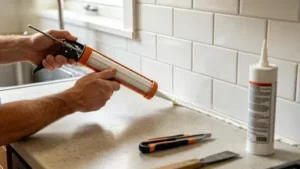
The caulking procedure is among the most valuable DIY skills because sealant is widely used in bathrooms, kitchens, windows, countertops, baseboards, and other joints. The use of a caulking gun provides pressure control; thus, it allows creating a continuous strip along the joint. Depending on the type of joint and manufacturer’s recommendations, a bead of about 3-6 mm might be needed. In general, holding a gun at about 45 degrees and moving steadily might help to get a better result. Clean caulking is supposed to include:
- Cleaning and drying the surface.
- Selecting a sealant suitable for the material and environment.
- Cutting the nozzle to the required opening.
- Applying steady pressure while moving continuously.
- Smoothing the bead before the sealant skins over.
Painting and Wall Touch-Ups
Basic painting techniques can help maintain walls in good condition or fix them when they suffer from scratches, discolorations, or damage. It is important to prepare the surface, removing any loose particles and filling small dents and cracks. Using two thin layers instead of one thicker layer of paint can be more effective for a small area. In addition, enough time should be provided for drying.
However, successful touch-ups depend not only on paint but also on other factors, including finish matching, proper preparation of the surface, and choice of the tool, such as a brush or roller.
Basic Plumbing Maintenance
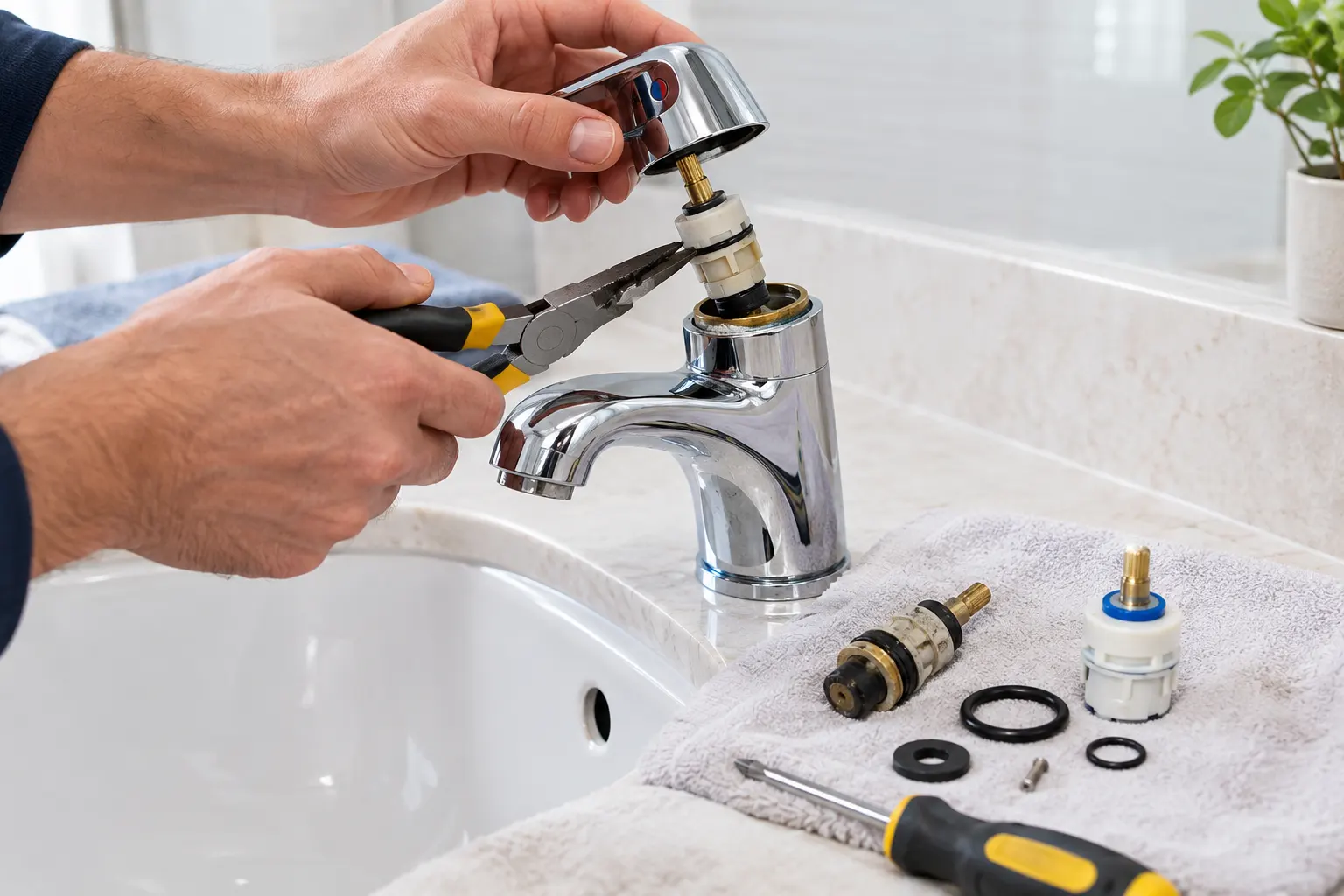
Homeowners will also find it useful to have some knowledge of plumbing repairs, particularly about simple repairs related to sink, faucet, and drain problems. Before attempting any plumbing repair, turn off the water source for that plumbing device. Upon completion of the repair process, slowly open the water source again and observe for any leakage at the connection point. Any leakage cannot be overlooked, as water damage could occur to the cabinets, floor, or adjoining materials. Complex situations, such as pipe breakage or excessive water leakage, require professional assistance.
Hanging Shelves and Wall-Mounted Items
Shelf and mirror mounting, as well as the hanging of pictures and other items on the wall, requires precision in measurement and correct fastening. Before doing any drilling, check what kind of material your walls are made of and make an estimate of how heavy the thing you want to hang will be. A basic installation process includes:
- Measure the mounting position.
- Mark the fixing points.
- Check alignment with a level.
- Select anchors suitable for the wall material.
- Drill to the required diameter and depth.
- Secure the mounting hardware and test stability.
The fastener should be selected according to both the wall type and load. A lightweight picture and a heavily loaded storage shelf should never be treated as the same installation task.
Basic Electrical Safety and Maintenance
Electrical experience is helpful; however, in this field, safety always comes first. A beginner can learn some techniques like changing a bulb, checking for damage to electrical panels, and observing such things as a burning smell, unusual warmth, sparks, or breaker trips. Before making any allowed electrical maintenance work, turn off the corresponding power source and check that the current is not flowing in that particular circuit by using proper checking techniques.
Furniture Assembly and Minor Repairs
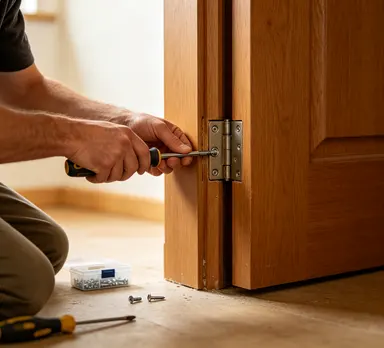
Assembling furniture teaches valuable skills of interpreting instructions, identifying hardware, measuring parts, and working with hand tools. The same skills can be used to make basic fixes, like tightening screws, replacing hinges, handles, drawer runners, and cabinet doors.
It is better not to overtighten, because it could ruin screws and scratch softer materials. When assembling wooden parts, checking proper alignment before final tightening helps avoid overworking joints. Periodic inspection every 3–6 months can be helpful for furniture that is used often: chairs, tables, cabinets, and storage furniture.
Basic Woodworking and Surface Repair
Basic carpentry provides homeowners with skills in measuring, cutting, sanding, joining, and finishing surfaces. These skills can be used for various small tasks, including fixing edges of wooden items, repairing minor damage, polishing rough surfaces, and changing some storage furniture parts. Measurement plays an important role. The general principle “measure twice, cut once” is quite helpful in this respect. When sanding a wooden surface, you can use progressively finer grades of abrasive to get a smooth surface for painting and finishing.
Conclusion
DIY skills that should be acquired at home are those that will be helpful in meeting maintenance requirements without the need for highly sophisticated tools and special training. The best means of acquiring such DIY skills is to start from low-stakes projects and continue from there to gain experience. Knowing the dimensions of materials to use and the correct use of tools is just as important as knowing how to repair. Through continuous practice, DIY skills will help improve efficiency in home maintenance and assist homeowners in determining when professional help is needed.
0