
目录
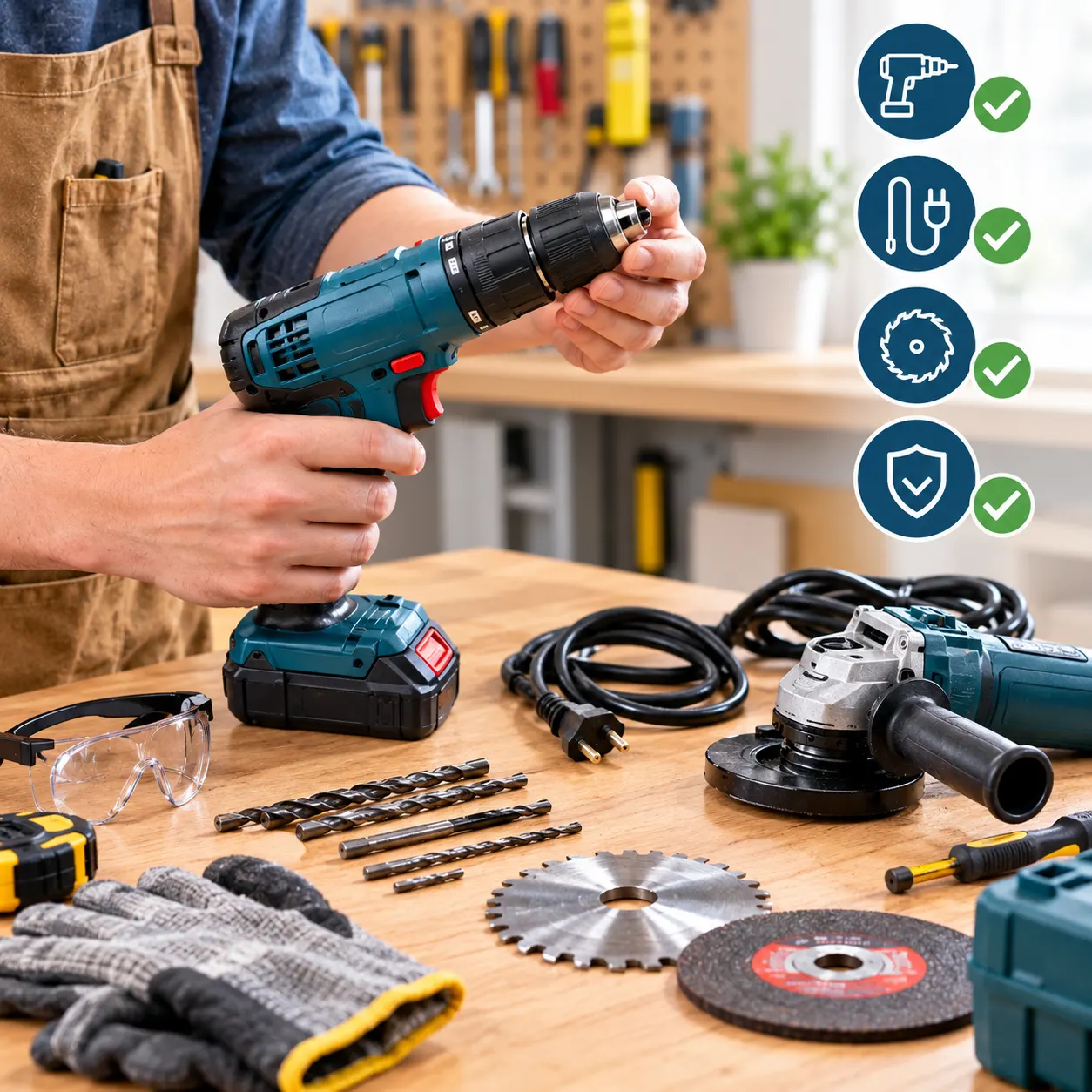
Power tools improve the effectiveness of actions like drilling, cutting, grinding, sanding, and fastening; but because of the quickness of their operations, one has to prepare well before using them. The cordless drill is capable of operating at a speed of about 2,000 rotations per minute, while other devices have a higher operating speed. It is necessary to inspect the tool, its attachments, its suitability for the task, and ensure the safety of the working area. Prior to the use of the tool, checking it might help to avoid any damage to the tool and injury on your part.
Why Should You Check Power Tools Before Use?
Preventing Common Tool-Related Accidents
Power tools produce mechanical energy, which may cause cuts, impact injuries, burns, and flying objects when the equipment is improperly used. Rotating accessories are particularly important because an unsecured bit or damaged cutting disc can fail during operation. A pre-use inspection should focus on several basic conditions:
- No cracked or broken housing
- No exposed electrical conductors
- Accessories are firmly installed
- Guards are correctly positioned
- Switches operate normally
- Ventilation openings are free from heavy dust
During the inspection, it is also necessary to consider whether the tool is appropriate for the operation. A power tool that is meant for drilling wood should not necessarily be considered suitable for drilling metal or masonry.
What Should You Check on Power Tools?
Inspect the Tool’s Physical Condition
First, examine the housing, handles, ventilation holes, moving parts, and other external parts. Check for cracks, dents, loose screws, broken clamps, or any other evidence of impact that may have made the tool unstable or unsafe to operate. Handles and external parts need to be secure before use.
In the case of battery-powered equipment, check for cracks, warping, leaking, or overheating in the battery casing and connection areas. Battery-powered tools should not be used if there is visible physical damage to the battery. For corded tools, examine the cable throughout its accessible length and not just at the plug end. Cuts, crushing, bare wires, or damage to the insulation should be noted.
Check Cords, Plugs, and Power Connections
Electrical connections require particular attention before a corded tool is switched on. Check for cuts, crushing, bare wires, bent plug prongs, or loose connections. The plug should fit snugly into the receptacle without any abnormal movement. A damaged power cord should never be repaired using tape and put back to work.
Also ensure that the tool is compatible with the power supply in terms of voltage. The tool that operates on 120 volts should not be operated on a different, higher voltage. When an extension cord is required, check that its capacity is suitable for the tool’s current demand. This is particularly important when using high-power equipment for extended periods.
Examine Blades, Bits, and Other Accessories
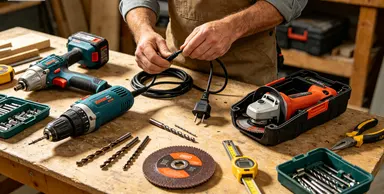
Since accessories make direct contact with the workpiece, their quality could impact safety and the quality of work. Drill bits should not have excessively worn, broken, or bent cutting edges. The saw blade must not have cracks, missing teeth, or substantial deformations. Grinding wheels and cutting discs require special care due to the danger they pose when rotating at high speeds.
Before installing the accessory, it is important to make sure that its maximum speed, mounting size, and type of coupling match. If a disc is meant for use at 8,000 revolutions per minute, it cannot be mounted on equipment with a higher maximum speed. Also make sure the accessory is designed for the material and operation being performed. Secure installation is essential to prevent movement or detachment during operation.
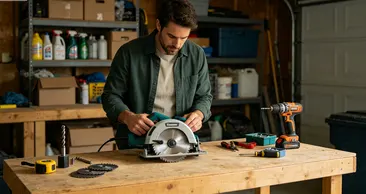
Test Guards, Switches, and Safety Features
Guards should be correctly positioned and should move, lock, or adjust according to the tool’s design. A saw guard, grinder guard, or other protective component helps reduce contact with moving parts and control flying debris. Never remove a guard simply to make a task easier or improve access to the workpiece.
Before beginning work, check the power switch or trigger. It should move smoothly and return correctly when released. In case the tool has a lock-on facility, variable-speed, brake, or any other safety facility, ensure that they function according to the manufacturer’s requirements. If the guard, switch, or other safety facility of the tool does not work properly, then do not use it.
How Should You Prepare Before Using Power Tools?
Read the Manufacturer’s Instructions
Make sure to read the manual before operating the tool. Learn what kinds of materials, procedures, accessories, voltage, maximum speed, and safety considerations the manufacturer recommends. Do not make any assumptions about the tool.
Confirm the Correct Tool and Accessory
Choose a tool and accessory that match the material and task. Before installation, check the mounting size, maximum RPM, material compatibility, required guard, and operating limits. Using the correct combination helps improve work quality and reduces unnecessary stress on the equipment.
Check the Work Area
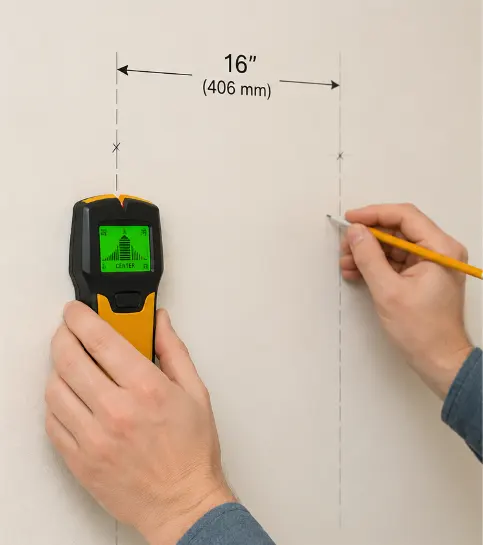
Ensure that the working space is clean, well-lit, and not cluttered with any unnecessary obstructions. Avoid loose objects as well as keeping cables away from any moving parts. When drilling holes in the wall, look out for any electrical wires and pipes inside it. Ensure that there is enough room to use the machine without difficulty.
Wear Appropriate Personal Protective Equipment
Wear personal protective equipment suited for the work. Safety goggles are essential when drilling, cutting, and grinding, whereas ear and dust protection would be needed in certain cases. Avoid wearing anything loose that can come in contact with any moving part.
Secure the Workpiece Before Operation
Fix the workpiece using clamps or a vice, among other means. Ensure that the workpiece will not move at all during the process. The cutting or drilling path should also be clear.
Conclusion
Having a good understanding of the things to look out for before operating any power tool is an important aspect of being efficient and safe. The first step is to inspect the tool for physical or electrical damage, look at the blades and bits, ensure that all the guards and switches are there, and ensure that all accessories are compatible with the tool.
It is equally important to have proper preparation for the job. One should read the manufacturer’s instructions, choose the right tool, prepare the workplace, wear appropriate protective clothing, and secure the material to be worked on. Any tool with electrical damage, faulty safety features, a high-speed accessory with cracks, or other unsafe conditions should not be used.
0