
目录
Not all home repairs necessitate special equipment, but possessing the appropriate tools will enable you to perform some routine maintenance faster, safer, and more accurately. Such home repairs as loosening a cabinet handle, fixing a leaking pipe joint, uneven hanging of a picture frame, and any wall damage could be performed with the help of some simple tools. Therefore, a typical home toolkit should consist of tools for fastening, cutting, measuring, drilling, electrical work, plumbing, and safety.
1. What Basic Hand Tools Do You Need for Home Repairs?
Screwdrivers and Hex Keys
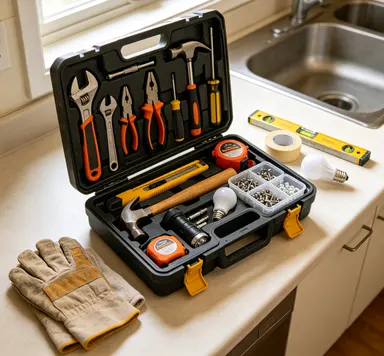
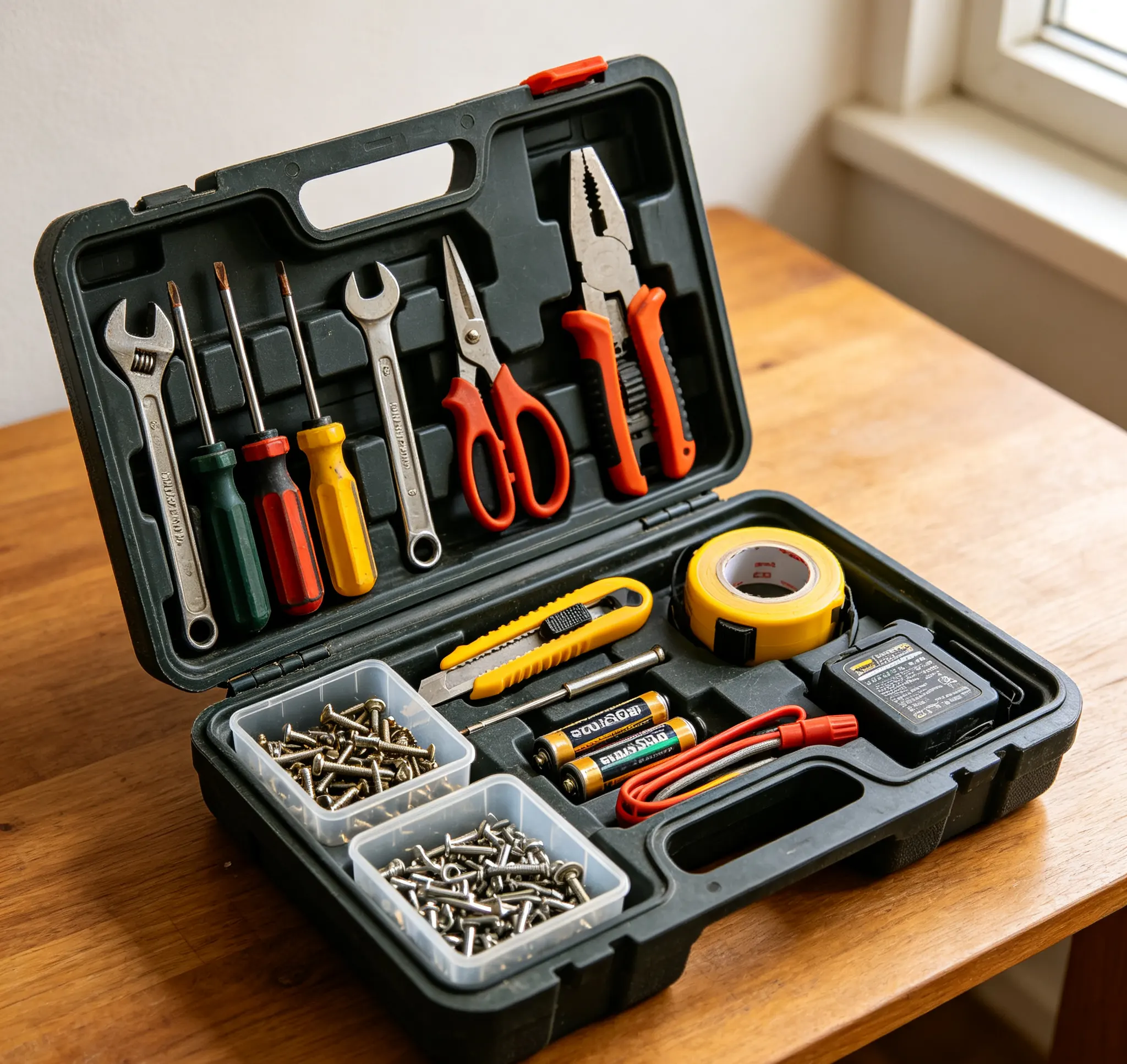
One of the most popular tools in home repairs is a screwdriver. The basic set of screwdrivers should contain both Phillips and flat-head screwdrivers of various sizes, such as 3 mm, 5 mm, and 6 mm blade widths. Screwdrivers with magnetic tips would facilitate screw fixing in narrow places. Hex keys, ranging from about 1.5 mm to 10 mm, are good for assembling furniture and bicycles.
To achieve versatility, it would be better to buy a ratcheting screwdriver with interchangeable bits, which would minimize the number of different tools. It is also important to have some Torx, square, and other kinds of special bits because modern furniture, machines, and fixtures are assembled using different screw types.
Pliers and Adjustable Wrenches
The grip, bend, and cut abilities provided by pliers cannot be managed through the use of a screwdriver. Some of the pliers included in the basic set may consist of combination pliers, long-nose pliers, and diagonal cutters. Combination pliers should be used for general gripping, whereas long-nose pliers are handy when working in confined areas.
Another important tool is an adjustable wrench,h which helps in the tightening and loosening of nuts and bolts of various sizes. It is desirable to select an adjustable wrench whose jaw width is around 25–30 mm. When working with finished surfaces, placing a protective cloth between the wrench and the fitting can help reduce scratches.
Hammer and Utility Knife
A claw hammer can help drive and remove nails, assemble wooden parts, and do light demolishing. A hammer of weight 450–550 g is a reasonable choice for household use. A utility knife can be used to cut such materials as cardboard, packaging, carpet, plastic sheets, and other thin materials. The selection of a knife with a retractable or locking blade can reduce accidental contact. One should not delay blade replacement due to bluntness, as it may cause slipping.
2. What Measuring and Installation Tools Are Useful for Home Repairs?
Tape Measure
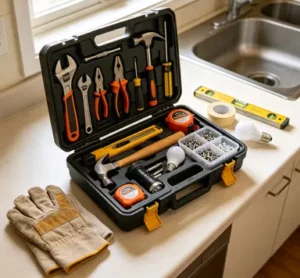
Measurements are very important before drilling, sawing, shelf placement, and acquiring any replacement parts. A 5 m tape measure should be enough for any room and any household task, while a 7.5 m tape measure will be more effective for bigger spaces. You need to find a blade that is marked in metric and has a locking feature. Taking measurements twice before making any cuts or drilling is a very easy way to avoid any mistakes in the process.
Level and Stud Finder
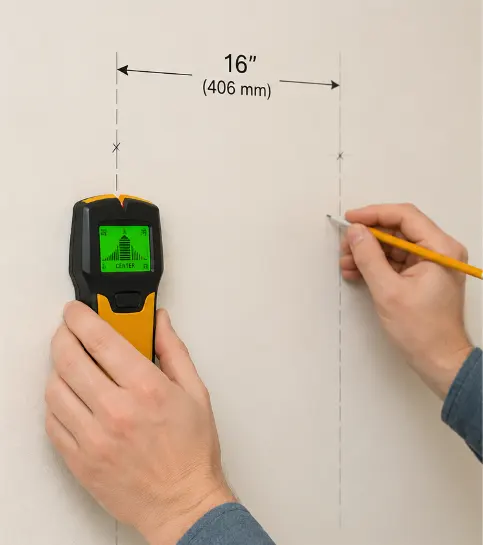
The level will help you install any fixtures in your house properly. A 230-600 mm spirit level is great for most of the household jobs, while a bigger level can serve as a good reference point on bigger surfaces. It is helpful to use a stud finder if you want to fix a heavy object to drywall. You need to know the location of the studs and check if there are any electrical cables or plumbing lines before drilling.
Drill and Drill Bits
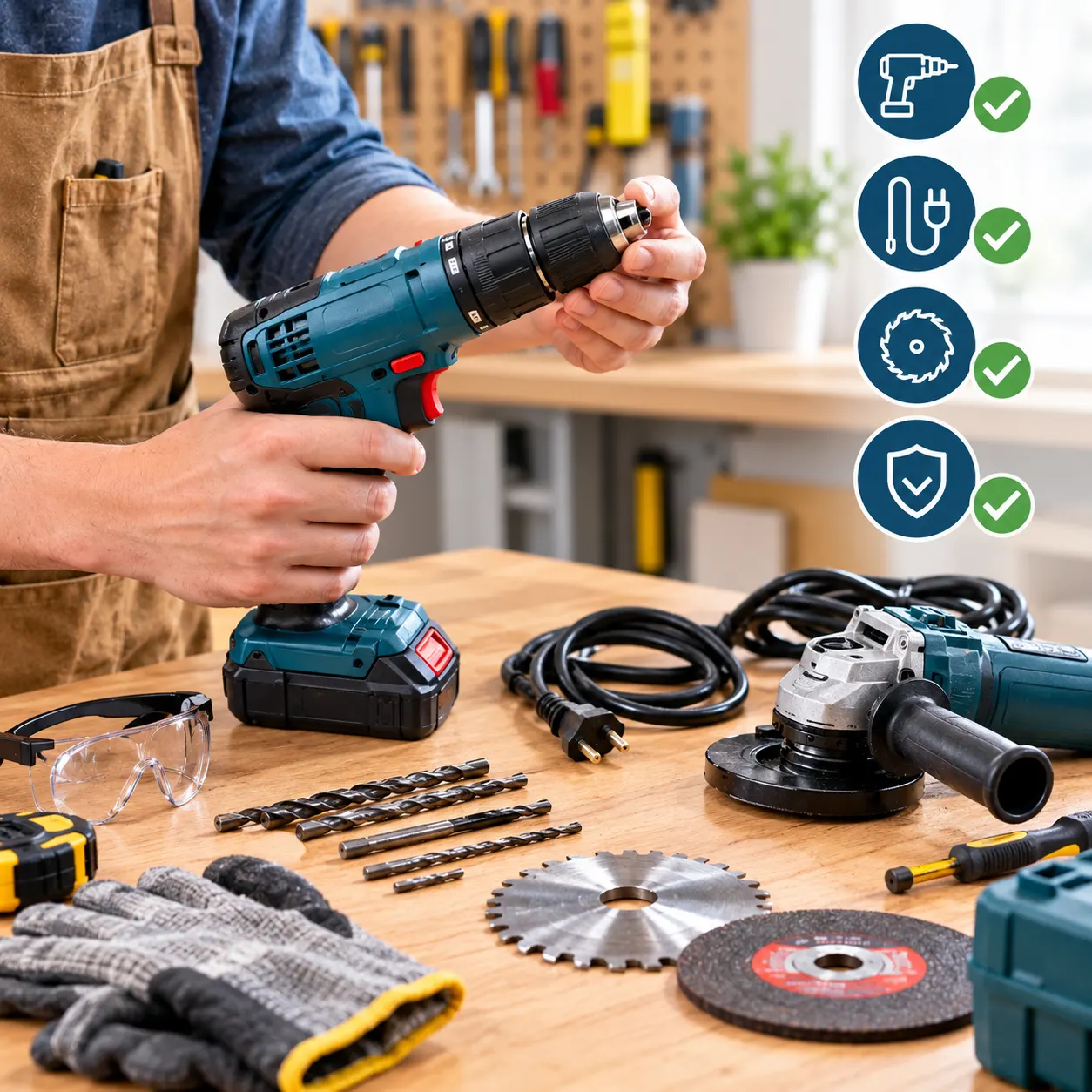
A cordless drill is among the most multipurpose power tools for home maintenance. A 12- to 20-volt cordless drill is ideal for drilling holes and fastening screws. There are variable speed and torque settings, which make the job easier when dealing with different materials.
The bit kit needs to match the material type. The common choices include wood bits, high-speed steel bits used on metal, and masonry bits for brick or concrete. For routine household work, a set covering approximately 2–10 mm can handle many small installation jobs.
3. What Tools Are Needed for Basic Electrical and Plumbing Repairs?
Electrical Testers and Insulated Tools
Basic electrical maintenance requires additional attention to safety. The non-contact voltage detector helps in identifying whether there is voltage present in an area without making contact with the conductor. It is possible to use a digital multimeter for measuring voltage, resistance, and continuity.
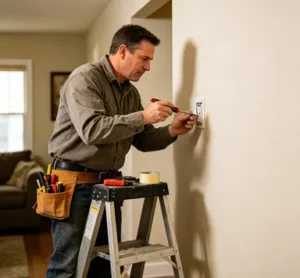
There are insulated screwdrivers and pliers that are specially made for electrical applications. House owners need to note that they should not perform any task involving electricity when the circuit is still live. When changing switches, outlets, or fixtures, turn off the circuit at the circuit breaker panel.
Pipe Wrenches and Basin Wrenches
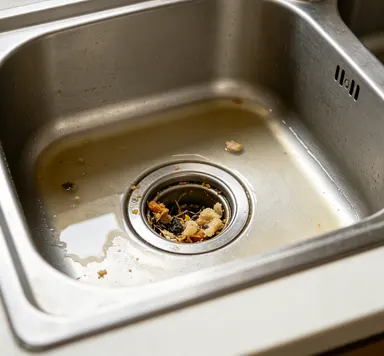
There will be situations when plumbing repairs will need fittings requiring a more secure grip than a normal adjustable wrench. A pipe wrench can be used for threads and fittings, whereas a basin wrench is used to tighten or remove nuts located in the limited area under the sink. At least one adjustable wrench and a pipe wrench will do for normal household plumbing repairs. Overtightening may damage the threaded fitting or the plastic fitting or valve.
Plumber’s Tape and Caulking Tools
The tape used to seal the threads, known as thread-sealing tape or plumber’s tape, may help tighten the compatible pipe threads. The tape should be applied in the right direction, and it should not be used in areas where loosened particles may come into the plumbing. A caulking gun will be helpful to seal the gaps around sinks, bathtubs, windows, and other similar items. Even beads provide better sealing results.
4. What Safety Tools Should You Have for Home Repairs?
Safety Glasses and Work Gloves
Safety glasses must be used while drilling, cutting, grinding, or dealing with material that can produce particles. Gloves can offer protection from sharp edges, roughness, and small mechanical dangers. Different jobs require different types of gloves, so do not use only one pair for all purposes.
Dust Mask and Hearing Protection
Cutting, drilling, and sanding operations might lead to the emergence of dust or other particles. The correct type of respiratory protection can help in reducing contact with dust. Power tools can produce a lot of noise, especially during long periods of their use.
Flashlight and Work Light
Poor visibility can lead to mistakes while measuring and handling materials. In case of working in a poorly illuminated area, it is helpful to have a portable lamp with batteries or even a headlamp. A light with several hours of battery life can provide practical support for longer repair tasks.
5. Conclusion
There is no need to have dozens of tools in a basic set of a home repair kit. The basic set of tools consists of screwdrivers, pliers, wrenches, a hammer, measuring instruments, a cordless drill, and necessary safety equipment. Adding electrical and plumbing tools based on actual household needs can further improve repair capability.
Tools must be selected based on the materials and conditions under which the repair will take place. With the appropriate selection of hand tools, measuring tools, power tools, and personal protective equipment, many common repairs around the house can be accomplished efficiently and safely.
0