
目录
The main financial advantage of doing maintenance work on your home is not saving money on the service call. It is the prevention of minor issues from turning into major expenses.
While a plumbing drip, a dirty HVAC filter, a leaking window, and a dusty appliance vent might seem minor, over time these minor issues will result in increased water or electricity consumption and decreased efficiency, eventually leading to higher repair costs.
The maintenance tasks that will be discussed do not require any special technical expertise. The basic idea is to:
Recognize the issue → Find out what caused it → Do something about it at an early stage
The four skills presented below have to do with water issues, heating/cooling systems, air infiltration, and appliance maintenance.
1. Home Maintenance Skill: Find Water Leaks Before They Become Expensive
Why Do Small Leaks Matter?
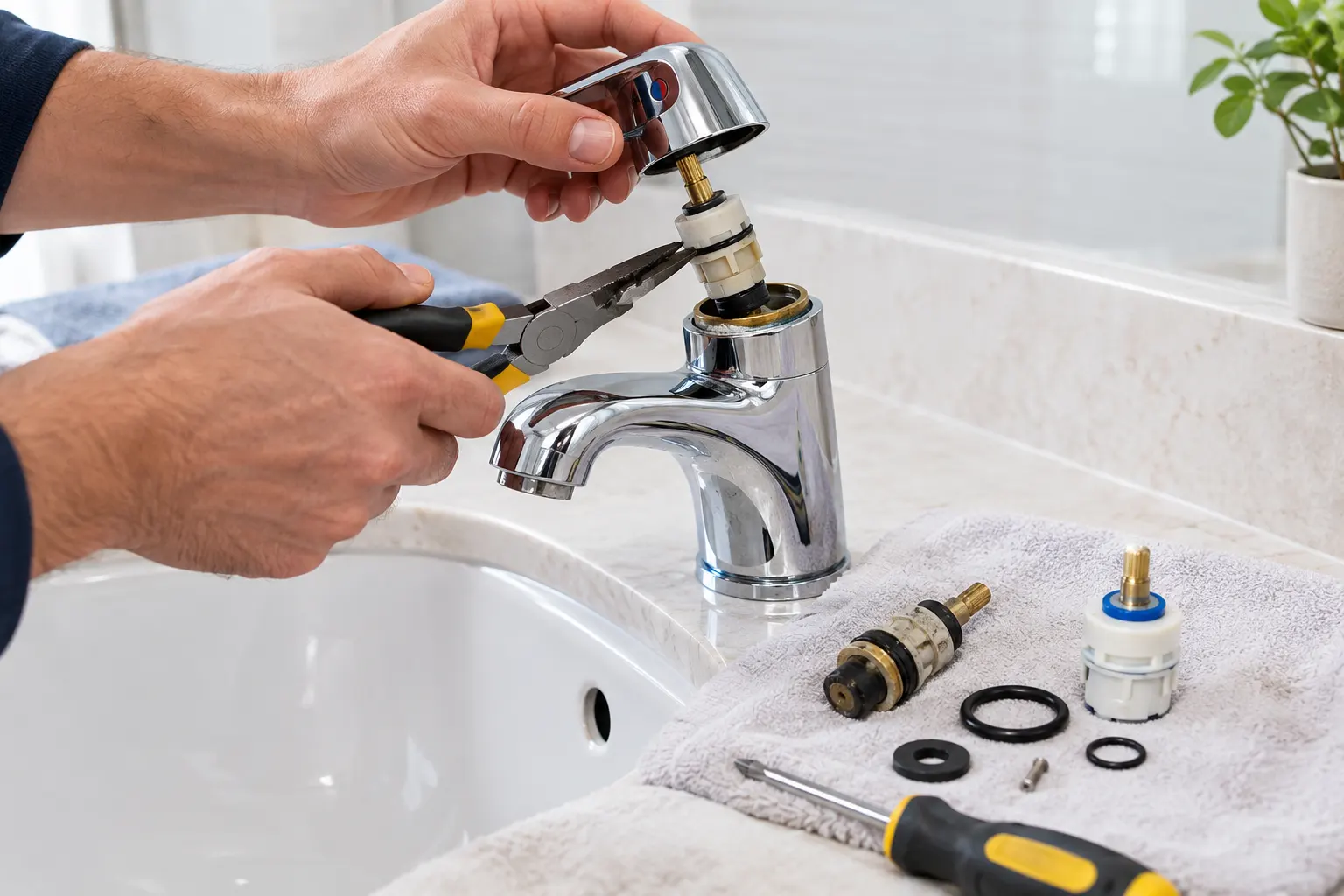
The cost of a leak extends to more than just the water bills. Continuous exposure of water to cabinets, flooring, drywall, or any other construction material causes swelling, discoloration, degradation, and moisture issues.
Think about the number of drops coming from one dripping faucet every two seconds. It is estimated to be around 43,200 drops per day. This does not take into account the actual quantity of water wasted depending on the size of the drops.
How Can You Check for Hidden Leaks?
The water meter will give you a heads-up.
Turn off all the faucets, washing machine, dishwasher, etc., take note of the meter reading, and refrain from using water for about 1-2 hours.
If there is still a change in the reading, do some investigation.
To test your toilet, put a little food coloring in the tank and wait for 10-15 minutes without flushing. If there is any color in the toilet bowl, your tank may have an internal leak.
Leaky pipe joints that are accessible can be seen easily, but leaking pipes that are concealed, serious water damage, repeating leakage, and water near electrical machinery need special attention.
The saving trick is not mending every leaking pipe yourself, but finding the leak before it damages anything.
2. Home Maintenance Skill: Keep HVAC Airflow Under Control
Why Does Airflow Matter?
An HVAC system requires a consistent airflow in order to heat or cool a home efficiently. Once an air filter is filled up with dirt, hair, and various other particles, the resistance to airflow increases.
This concept is quite simple: Dirty Filter = Restricted Airflow = Increased Load on System
A dirty filter does not necessarily lead to a failure of the HVAC system.
How Often Should You Check the Filter?
While 1–3 months is the typical inspection or filter change period for residential filters, there is no standard frequency.
The proper frequency will depend on:
• Filter Type
• Presence of Pets
• Indoor Dust Level
• Runtime of the system
• Conditions of the locality
• Manufacturer’s recommendation
Rather than changing the filter after every 90 days, consider checking the filter for its current condition. Visible dirt accumulation, along with reduced airflow, is a more convincing factor than just the time limit.
Supply and return vents should also be checked, as furniture, curtains, or stored materials may hinder air circulation even though the filter itself is not clogged.
Three major aspects should be considered while maintaining your system: Clean Filter + Open Vents + Proper Air Circulation
Any problem with the internal electrical, refrigerant, or mechanical components of the HVAC system should be done by experts only.
3. Home Maintenance Skill: Stop Air Leaks Around Doors and Windows
Why Can a Small Gap Cost Money?
Air leaks facilitate the passage of conditioned air out of the house and the entry of air into the building from outside. This will result in longer operating time of the heating and cooling systems in order to maintain the chosen temperature.
Assume that the temperature inside the house is 70°F (21°C) in winter, whereas the outdoor temperature is 35°F (2°C). The temperature difference will be about 35°F (19°C).
When doors and windows have large openings, the heating system will have to continuously make up for the lost air.
What Should You Inspect?
Inspect the following:
• Weatherstripping
• Door sweeps
• Window seals
• Caulk
• Visible gaps in the frames
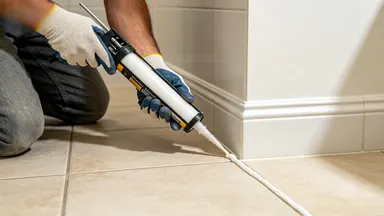
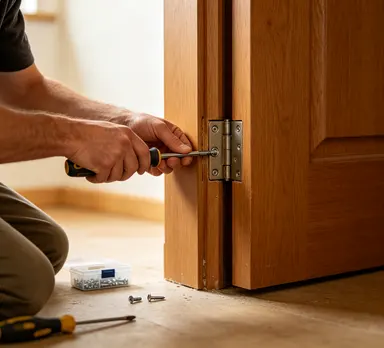
The damaged weatherstripping will usually be either hard, cracked, compressed, or detached. The deteriorated caulk may come off from the frame, leaving visible gaps.
While replacing failed caulk, one should not just cover the old product but do it this way: Removing Failed Caulk → Cleaning Surface → Drying → Applying New Sealant
This allows for creating better surfaces for attaching new material.
But it must be remembered that sealant cannot be a solution to all possible problems. For example, there might be some other problems in the frame.
4. Home Maintenance Skill: Maintain Appliances Before They Fail
Why Is Preventive Appliance Maintenance Important?
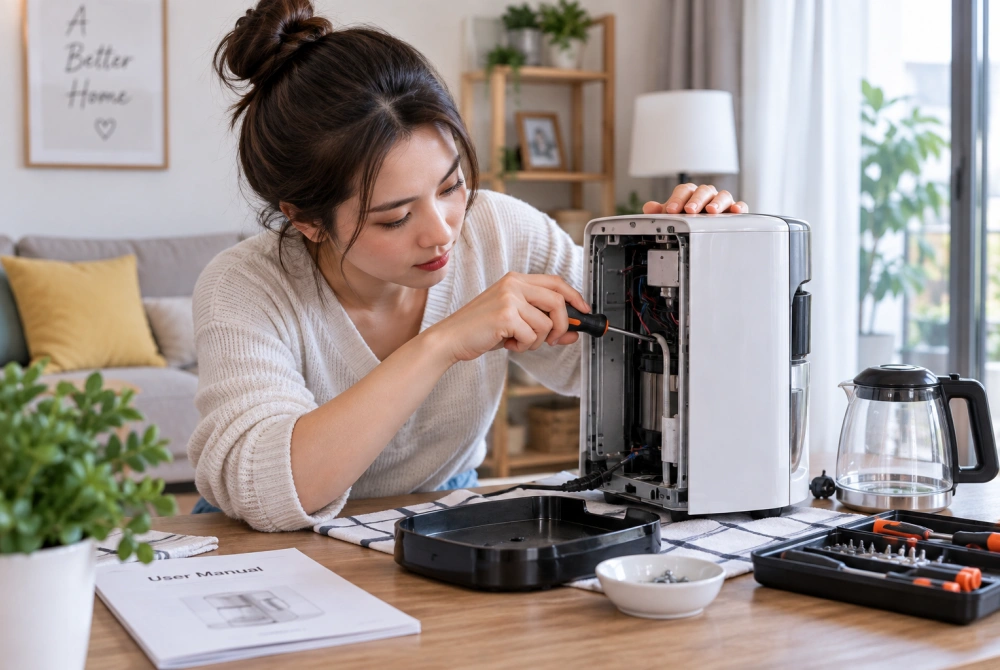
The problem with an appliance does not necessarily arise because one of its parts has failed. Such problems can arise due to the accumulation of dust, lint, hair, food particles, and restricted airflow.
Several areas are worth checking:
| Appliance | Maintenance Area | Possible Effect |
| Dryer | Lint filter | Longer drying time |
| Refrigerator | Ventilation area | Poor heat dissipation |
| Dishwasher | Filter | Odors or drainage issues |
| Vacuum | Filter and brush | Reduced suction |
| Washing machine | Drain area | Slow drainage |
Watch for Changes in Performance
For instance, if an appliance took 45 minutes to dry but now takes 60 minutes, then the run time is up by: 15 ÷ 45 × 100 ≈ 33%
It does not necessarily imply that the use of electricity has gone up by 33%, since the amount of energy used is affected by power consumption and other factors. Nevertheless, this rise in run time is a good enough reason to check the lint filter, venting system, and other parts that you can maintain.
Other symptoms include an excessively long run time of a refrigerator, a slow drainage from a dishwasher, weak suction of a vacuum cleaner, and excessive vibration of a washing machine.
When a home appliance starts performing poorly before it breaks down, your maintenance efforts become more effective.

Conclusion
Home maintenance is all about solving things when they are still small. Inspections for leaks, proper airflow in HVAC systems, sealing of windows and doors, and keeping appliances clean will decrease waste and prevent minor problems from turning into big and costly repairs.
The most important thing you should learn is not how to solve everything on your own, but when to stop doing it.
0