

目录
The ficus s shape tree is a highly decorative plant widely used in indoor landscaping, hotels, gardens, and office spaces due to its elegant curved trunk and lush foliage. Although it is visually attractive and relatively adaptable, maintaining its unique S-shaped structure requires consistent care and proper environmental management. Many growers face challenges during cultivation, especially when it comes to lighting, watering, shaping, and pest control. These issues can affect not only the plant’s health but also its carefully trained form. Understanding the common problems associated with ficus s shape trees is essential for preventing damage and ensuring long-term growth success.
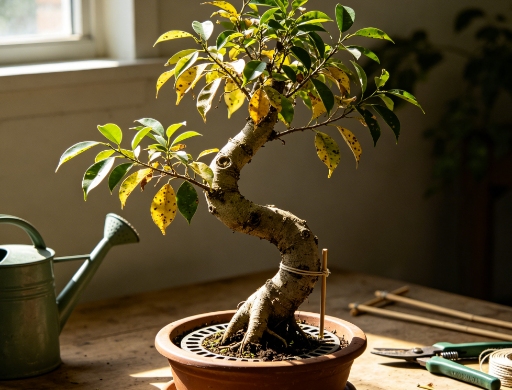
Uneven Growth and Loss of S Shape Structure
One of the most frequent issues when growing a ficus s shape tree is the loss of its balanced curved structure due to uneven growth patterns.
- Directional light imbalance: When the plant receives light from only one direction, it naturally bends toward that side, causing distortion of the S shape over time.
- Rapid vertical growth: In overly warm or nutrient-rich conditions, the plant may grow too quickly upward, weakening the intended curved design.
- Insufficient pruning control: Without regular trimming, unwanted branches can grow freely and disrupt the clean structure of the S curve.
- Support system failure: If stakes or shaping wires are not adjusted properly, the trunk may slowly revert to a straighter or irregular form.
Maintaining structural balance requires continuous adjustment and careful observation of growth direction.
Watering Mistakes and Root-Related Problems
Water management is another major challenge that directly affects the health of a ficus s shape tree, especially in indoor or container environments.
- Overwatering issues: Excess water can lead to root rot, weakening the plant and causing leaf yellowing or drop.
- Underwatering stress: Too little water results in dry soil conditions, causing leaves to curl and reducing overall vitality.
- Poor drainage system: Pots without proper drainage holes trap moisture, increasing the risk of fungal infections.
- Inconsistent watering schedule: Irregular watering patterns stress the root system and negatively affect stable growth.
Root health is the foundation of the plant’s stability, and improper watering is one of the most damaging mistakes.
Light Deficiency and Environmental Stress
Lighting conditions play a critical role in the development of a ficus s shape tree, and inadequate light often leads to visible growth problems.
- Weak indoor lighting exposure: Insufficient light causes slower photosynthesis, resulting in thin stems and sparse leaves.
- Leaf drop in low light conditions: When light levels are too low, the plant may shed leaves to conserve energy.
- Uneven canopy development: One-sided lighting causes imbalanced leaf growth, affecting overall appearance.
- Temperature fluctuations: Sudden changes in temperature or exposure to cold drafts can stress the plant and slow down growth.
Stable lighting and environmental consistency are essential for maintaining both health and shape.
Pest Infestation and Leaf Damage Issues
Like many ornamental plants, the ficus s shape tree is also vulnerable to pests and diseases that can affect its appearance and vitality.
- Common pests such as spider mites and aphids: These insects feed on leaves, causing yellow spots and weakening plant health.
- Leaf discoloration and spotting: Fungal infections or pest activity often result in uneven leaf coloring or damage.
- Dust accumulation on leaves: Indoor environments can cause dust buildup, reducing photosynthesis efficiency.
- Delayed treatment impact: Ignoring early signs of infestation can lead to rapid spreading and severe damage.
Regular inspection and timely treatment are necessary to maintain a clean and healthy plant environment.
Maintenance Errors in Pruning and Shaping
Improper pruning and shaping techniques are also common problems that affect the aesthetic value of a ficus s shape tree.
- Over-pruning damage: Cutting too many branches at once can weaken the plant and slow recovery.
- Incorrect cutting points: Poor pruning techniques may lead to uneven regrowth or unwanted branching directions.
- Neglecting shape correction: Failing to adjust growth regularly allows the S curve to become distorted over time.
- Lack of gradual shaping: Sudden bending or forceful shaping can damage the trunk structure and create permanent scars.
Proper pruning requires patience and a gradual approach to maintain both plant health and artistic form.
Conclusion
Growing a ficus s shape tree comes with several common challenges, including uneven growth, watering mistakes, light deficiency, pest problems, and improper maintenance practices. While these issues can affect both the health and appearance of the plant, most of them can be prevented or corrected with proper care and regular monitoring. By maintaining balanced environmental conditions, using correct watering techniques, ensuring adequate light exposure, and applying careful pruning methods, growers can successfully preserve the elegant S-shaped structure. With consistent attention, the ficus s shape tree can remain a long-lasting and visually striking ornamental plant in any space.
0