

目录
The inverter decides how solar power is generated, controlled, and supplied to the building, batteries, or grid. Although hybrid and grid-tied inverters both utilize photovoltaic (PV) panels, they work towards varied objectives in energy management. It is essential to understand what an on-grid solar inverter is when comparing inverters for residential, commercial, and distributed energy projects.
1. What Is an On Grid Solar Inverter?
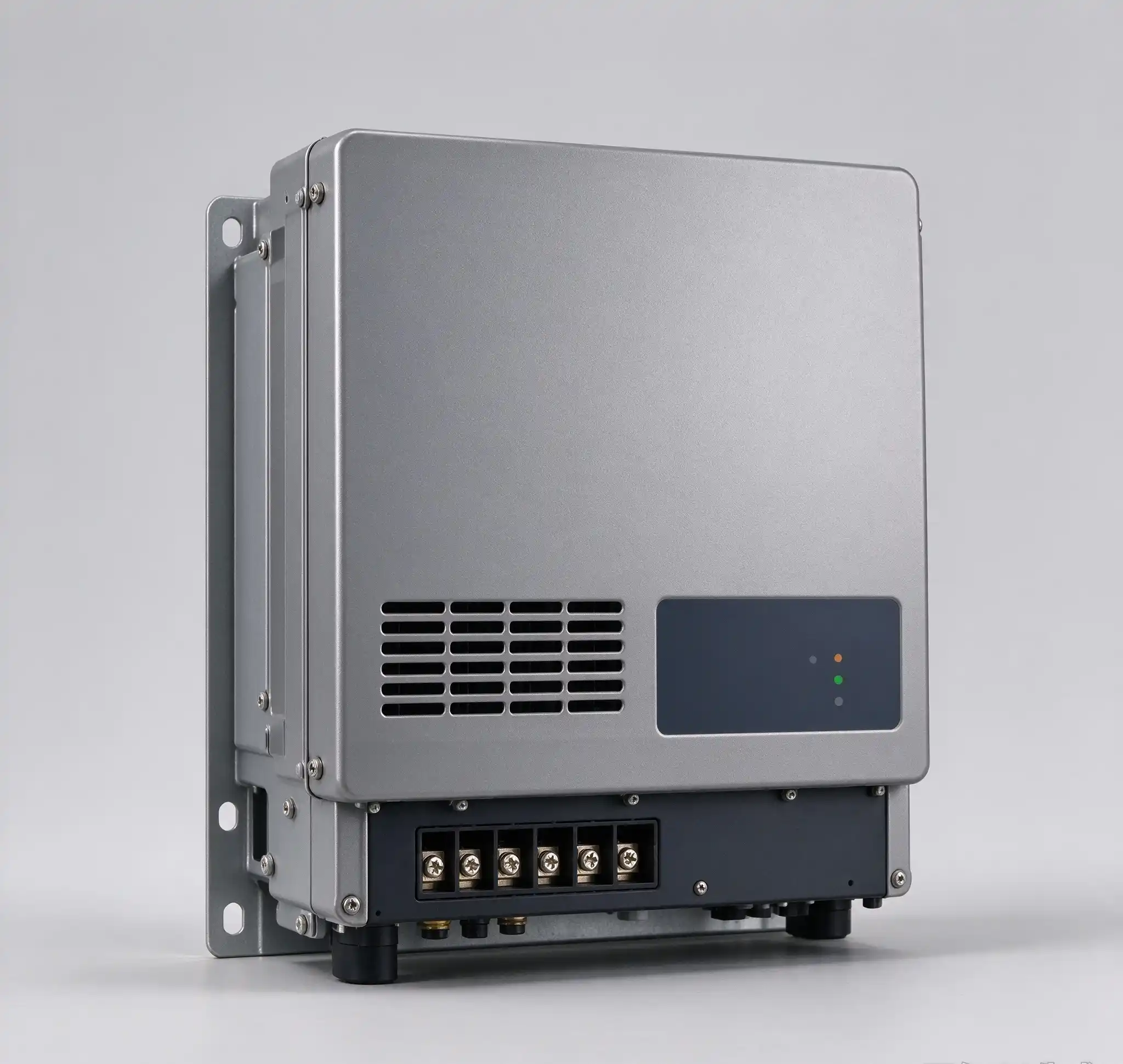
The on-grid solar inverter connects the PV array with the electrical load and utility grid. The inverter transforms the DC power generated by the solar modules into grid-suitable AC power by keeping in line with the grid voltage and frequency. Modern units can also monitor operating conditions and support grid-management functions.
How Does an On Grid Solar Inverter Work?
Throughout the day, the solar panels produce DC power, which is transformed into AC electricity using the MPPT technique to maximize the power output of the solar panels. The power can either be supplied to local loads or exported to the grid in case permission is granted. For instance, a 10 kW PV array combined with a 10 kW inverter can provide AC output of about 10 kW under certain circumstances, although the exact output is influenced by various factors.
The conventional grid-tie inverter is also equipped with an anti-islanding feature. The conventional grid-tie inverter stops running if the utility grid fails, to prevent feeding electricity to the grid during an outage. This helps protect utility workers and maintain electrical system safety.
2. What Is a Hybrid Solar Inverter with an On Grid Solar Inverter Function?
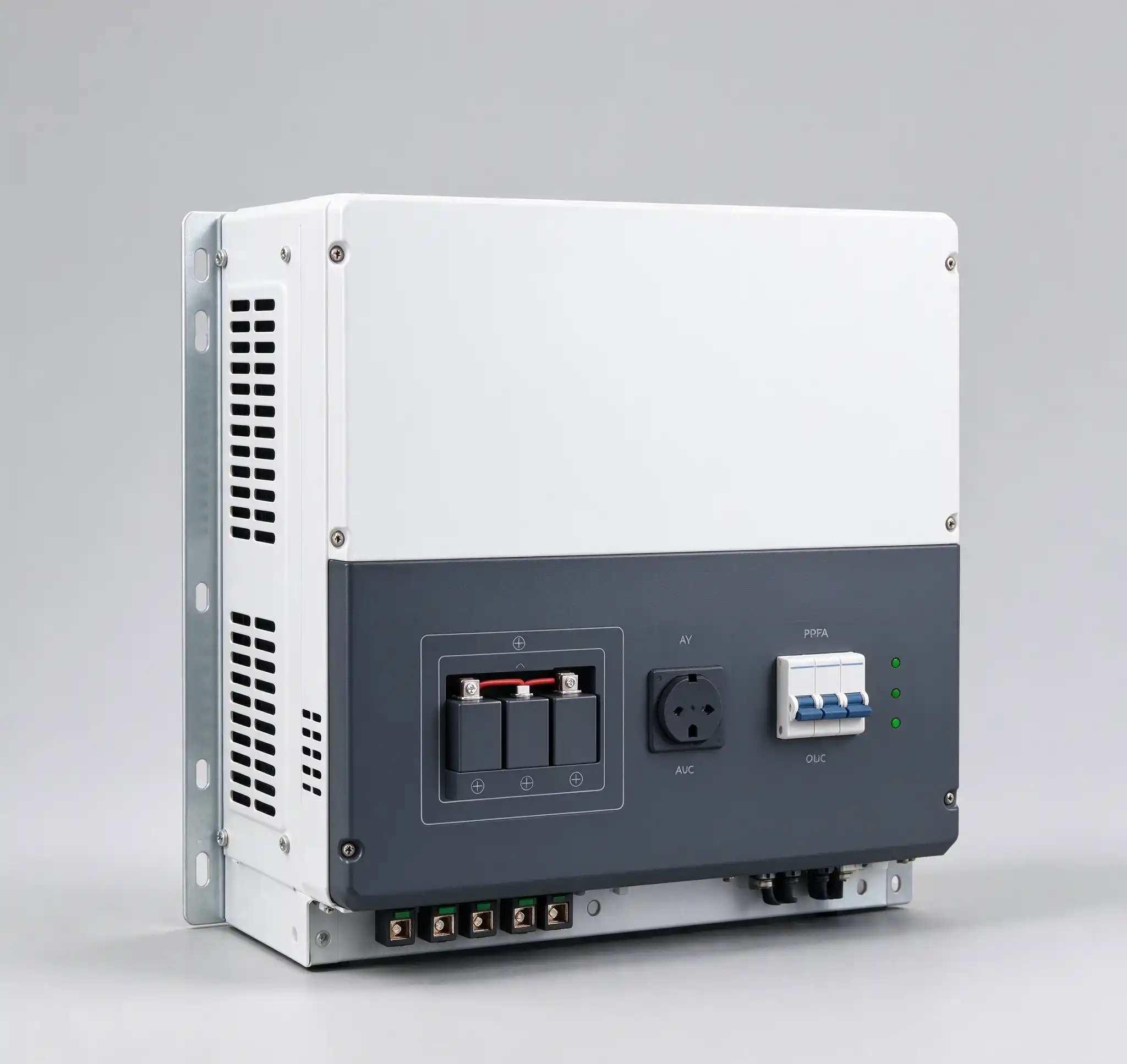
The hybrid solar inverter integrates PV conversion, battery operation, and grid-tie functions into a single inverter. The inverter would be able to deliver solar energy to loads, charge the battery using the excess solar energy generated, and sell surplus energy to the grid or utilize stored energy when necessary. Compared with a basic on grid solar inverter, it provides an additional energy-storage path.
How Does a Hybrid Solar Inverter Work?
A typical hybrid system manages several power paths:
- PV → inverter → loads
- PV → battery
- Battery → inverter → loads
- Grid → loads or battery
Let us assume that there is a 6 kW hybrid inverter which is connected to a 10 kWh battery. Solar energy will be able to feed the loads and charge the battery during sunshine, while in the evening, the stored electricity will help to save some money from purchasing electricity from the utility grid.
In case there is a grid outage, the system will be able to disconnect certain circuits from the grid and function in backup mode. But this is possible only if the inverter and the battery are capable of performing backup operations.
3. On Grid vs. Hybrid: Key Differences
The major difference between the two architectures is how they handle energy storage, outages, and energy scheduling.
Battery Compatibility
A conventional on grid solar inverter primarily converts PV power and manages grid interaction. The addition of battery storage requires a separate battery inverter or an AC coupling solution. The hybrid inverter combines PV and battery management; therefore, the voltage range, battery chemistry, communication protocol, charge/discharge current, and usable battery capacity will have to match those of the inverter.
Sizing batteries requires taking into account usable energy rather than the nominal capacity of the battery. For instance, a battery with 10 kWh may yield usable energy of less than 10 kWh of usable AC due to constraints on DoD and conversion efficiency. Therefore, both inverter compatibility and actual needs have to be taken into consideration when sizing the batteries.
Power During a Grid Outage
The standard on-grid inverter will always shut down once the utility goes off. As a result, solar panels themselves do not ensure that you will have a backup. A hybrid system can maintain selected loads when its backup function, battery, protection equipment, and wiring are properly configured. As an example, a 5kW backup capacity will cover lighting, refrigeration, networking devices, and chosen outlets, but it will not cover several devices at once.
Energy Management
The On Grid Solar Inverter system is mostly concerned with photovoltaic conversion and proper connection to the grid. Depending on the configuration, its focus is either self-consumption or exportation. The hybrid type includes control of battery charging and discharging operations. The energy stored in the batteries could be determined based on solar energy production and the user’s need for energy at different times of the day. For larger energy systems, source-grid-load-storage integration can further coordinate power generation, grid interaction, loads, and storage to improve energy management.
Cost and System Complexity
Generally, an on grid solar inverter system involves less equipment since it does not include battery banks and a battery management interface. A hybrid system usually costs more because it adds batteries, protection devices, communications, and control functions. The additional investment, however, provides energy-shifting and backup capabilities that a basic grid-connected system does not normally provide.
Application Scenarios
An on grid solar inverter is commonly used where the main objective is solar generation and lower grid electricity consumption without battery backup. If there is a need for both solar energy generation and battery storage, then hybrid inverter systems would be preferable. In addition, commercial buildings with critical loads could incorporate the hybrid systems into larger energy storage projects.
| Feature | On-Grid System | Hybrid System |
| PV conversion | Yes | Yes |
| Grid connection | Yes | Yes |
| Battery integration | Usually external | Integrated |
| Backup during outage | Normally unavailable | Available with proper configuration |
| Energy shifting | Limited | Supported |
| System complexity | Lower | Higher |
| Main purpose | Solar + grid interaction | Solar + storage + management |
4. On Grid vs. Hybrid: Choosing an On Grid Solar Inverter
The architecture depends on user load patterns, reliability of the grid, energy storage requirements, budget, and expansion plans. Comparing the inverter capacity, battery capacity, load to be backed up, and daily energy consumption is more practical.
When to Choose an On Grid Solar Inverter
An on grid solar inverter may be appropriate when:
- Utility service is relatively reliable.
- The main goal is reducing daytime electricity purchases.
- Battery storage is not currently required.
- A simpler PV architecture is preferred.
- Lower system complexity is important.
For example, a warehouse with high daytime consumption may use much of its solar generation directly. A properly sized 30 kW inverter and PV array can be designed around this load profile.
When to Choose a Hybrid Solar Inverter
A hybrid inverter may be more appropriate when the project requires battery storage, backup capability, or greater control over energy timing. It can be considered when:
- Evening demand is significant.
- Time-of-use pricing encourages load shifting.
- Critical circuits must remain powered during outages.
- Solar production often exceeds daytime consumption.
- Future storage expansion is expected.
Sizing of batteries must be done from actual load measurements. If the average load is 2 kW for four hours for the critical loads, then there would be an 8 kWh demand before taking into account reserve capacity and efficiency losses.
5. Conclusion
The on grid solar inverter is mostly meant for PV system production and grid connection, whereas the hybrid inverter also involves the battery system. While the former may work well in simple grid-connected PV systems, the latter has some extra features that can come in handy in systems that need energy storage. Before deciding what to choose, you should think about your PV production capacity, peak and average load, battery needs, backup circuitry, grid conditions, interconnection standards, and future expansion plans.
0