

目录
The Variegated Ficus is a beautiful ornamental plant valued for its patterned foliage and elegant indoor appearance. Although it is considered relatively easy to care for, watering remains one of the most important factors affecting its long-term health and growth. Too much water can lead to root rot and leaf drop, while insufficient watering may cause dry leaves and slowed growth. The ideal watering frequency depends on environmental conditions such as temperature, humidity, lighting, pot size, and soil drainage. Understanding how and when to water properly helps maintain healthy roots, vibrant foliage, and stable growth throughout the year.
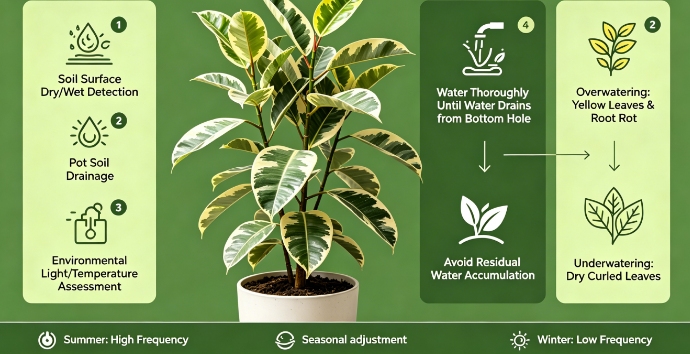
1. General watering frequency for healthy growth
The watering schedule for a variegated fig should always be adjusted based on the plant’s environment, rather than following a fixed calendar schedule.
- Check soil moisture before watering:
Before replenishing moisture, the top layer of the soil (approximately 2 to 3 centimeters deep) should feel slightly dry. This method is more reliable than strictly adhering to a fixed watering schedule. - Typical indoor watering pattern:
Under normal indoor conditions, most plants require watering about once every 7–10 days during active growth periods. - Seasonal changes matter:
During winter, growth slows down, and water evaporation decreases, so watering frequency should be reduced significantly. - Avoid continuously wet soil:
Constant moisture around the roots can reduce oxygen flow and create conditions for fungal diseases.
Monitoring soil conditions regularly is the safest way to maintain balanced hydration.
2. Environmental factors that affect watering needs
Several environmental conditions directly influence how often a Variegated Ficus needs water.
- Light exposure intensity:
Plants placed in bright indirect light generally use water faster than those kept in darker indoor areas. - Indoor temperature levels:
Warm environments increase evaporation and plant metabolism, causing the soil to dry more quickly. - Humidity conditions:
In dry indoor air—particularly during the heating season—this plant may require more frequent watering to prevent stress caused by a lack of water. - Pot and soil type:
Terracotta pots and fast-draining soil dry out more quickly than plastic containers with dense soil mixes.
Because every indoor environment is different, observation is more important than following rigid watering intervals.
3. Signs of overwatering and underwatering
Learning to recognize stress symptoms helps protect a Variegated Ficus from long-term damage caused by improper watering.
- Common signs of overwatering:
Yellow leaves, soft stems, moldy soil surfaces, and a persistent wet smell often indicate excessive moisture around the roots. - Symptoms of underwatering:
Dry, curled, or crispy leaves usually suggest that the plant is not receiving enough water. - Leaf dropping caused by an imbalance:
Both excessive and insufficient watering may trigger leaf loss as the plant reacts to stress. - Slow growth and weak foliage:
Improper watering can reduce nutrient absorption, leading to smaller leaves and weaker stem development.
Identifying these symptoms early allows quick correction before severe root damage occurs.
4. Best watering practices for long-term plant health
Proper watering techniques are just as important as watering frequency when caring for a Variegated Ficus.
- Water deeply but carefully:
Water should fully moisten the soil until excess liquid drains from the bottom of the pot, ensuring even root hydration. - Use containers with drainage holes:
Good drainage prevents water accumulation and reduces the risk of root rot. - Empty excess water promptly:
Decorative trays should not hold standing water for extended periods because roots should never remain submerged. - Adjust care during seasonal transitions:
In spring and summer, growth is more active and water demand increases, while autumn and winter require more conservative watering.
Consistent care habits help maintain stable moisture levels and encourage healthier overall growth.
Conclusion
The Variegated Ficus does not follow a single fixed watering schedule because its needs vary according to light, temperature, humidity, and soil conditions. In most indoor settings, watering every 7–10 days is generally suitable, but checking soil moisture remains the most reliable method. Proper watering practices, combined with good drainage and environmental stability, help prevent common problems such as root rot, leaf drop, and dehydration. Through balanced moisture management, this ornamental plant can maintain a healthy root system and lush foliage indoors, achieving robust long-term growth.
0